Urban Interventions
/ 10-week Exploratory Sprint
/ Objective: Drive mobility and connectivity of communities in the Midwest.
01/04
Research
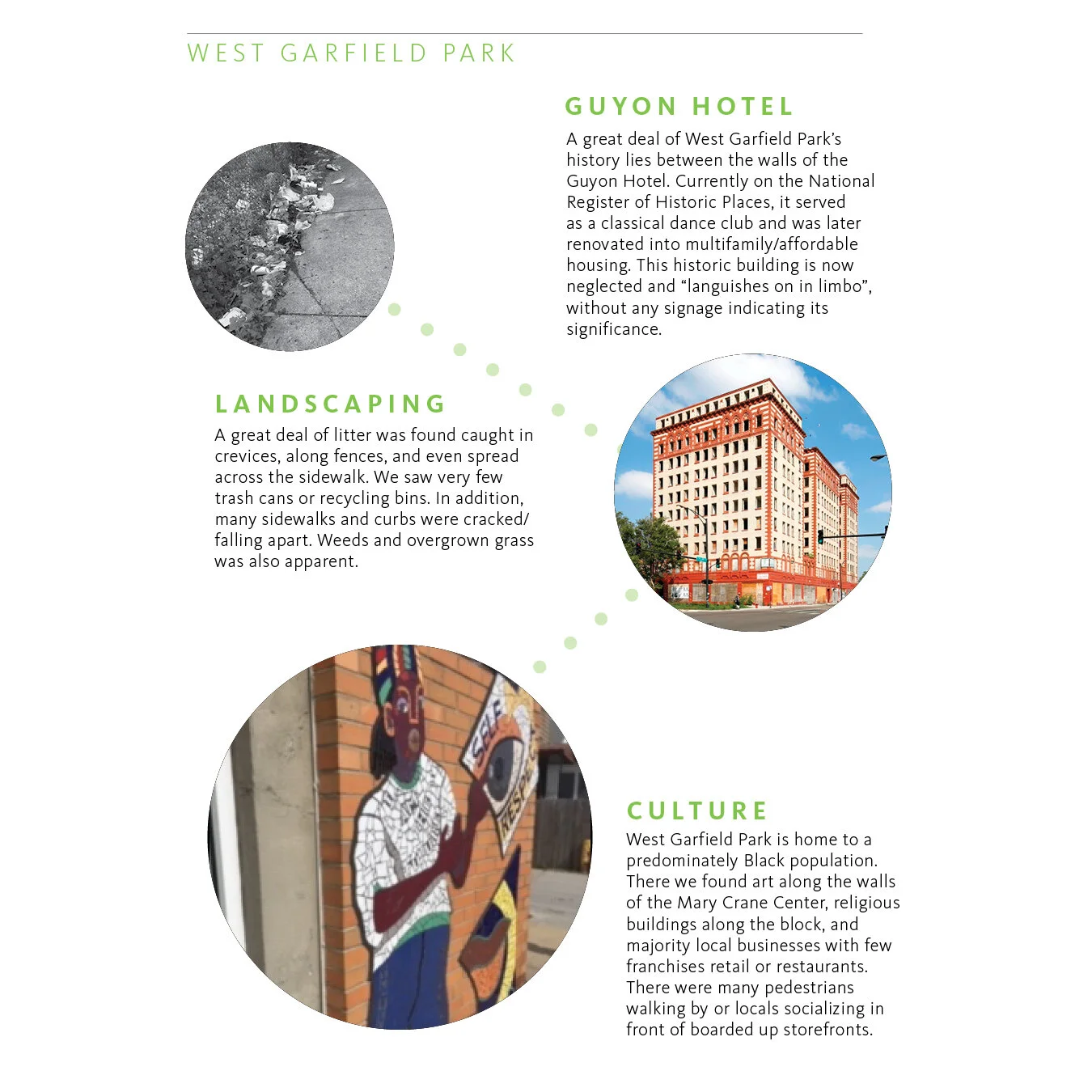
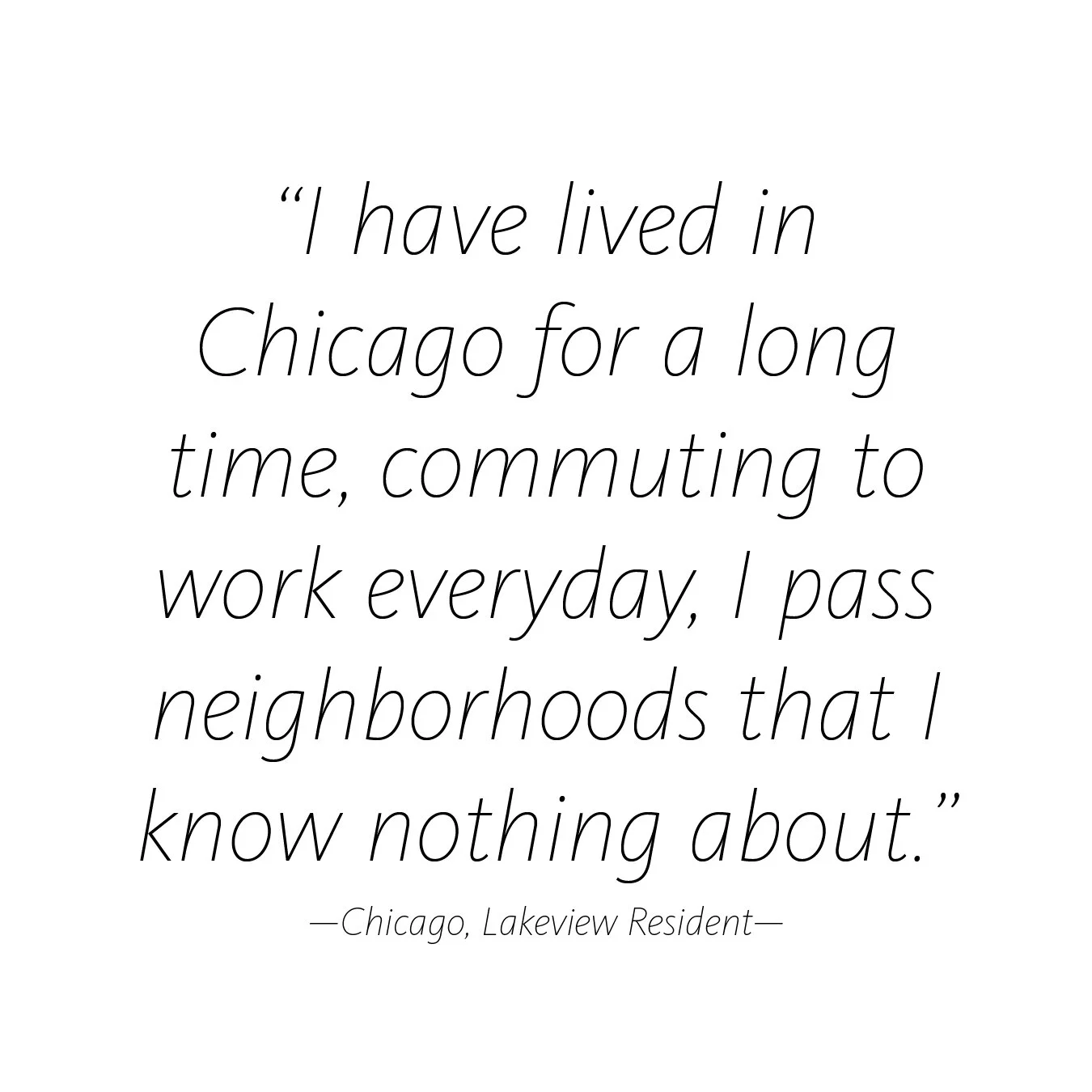
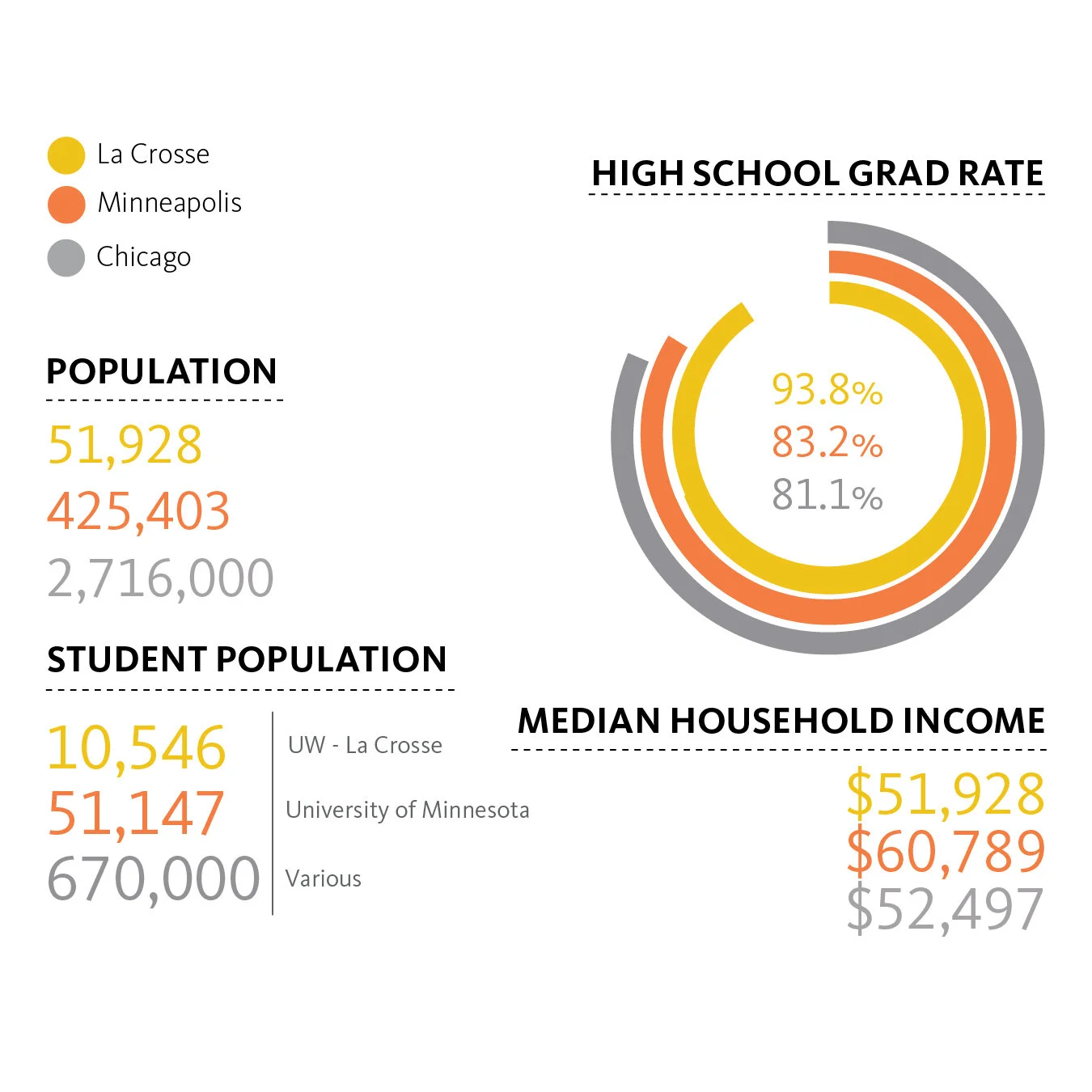
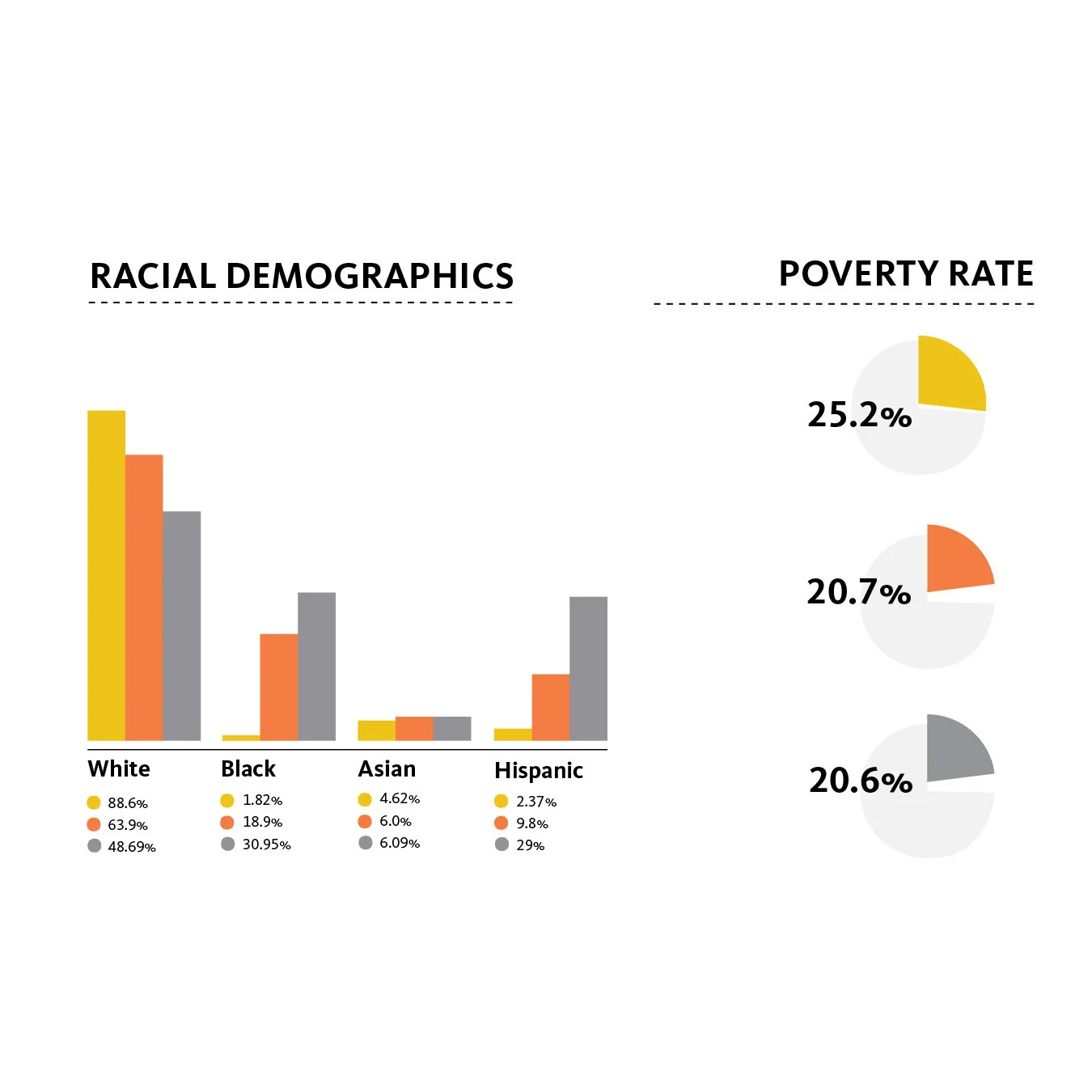
Observational research in public community spaces (specifically public transit stops) completed across 3 midwest cities (Chicago, Minneapolis, La Crosse) varying backgrounds and experiences . This work was paved by the insightful interactions we had with community leaders, professionals, and community members of various backgrounds. Without them, our process and product wouldn’t be rooted in the idiosyncratic qualities of the community.
Chicago Green Line:
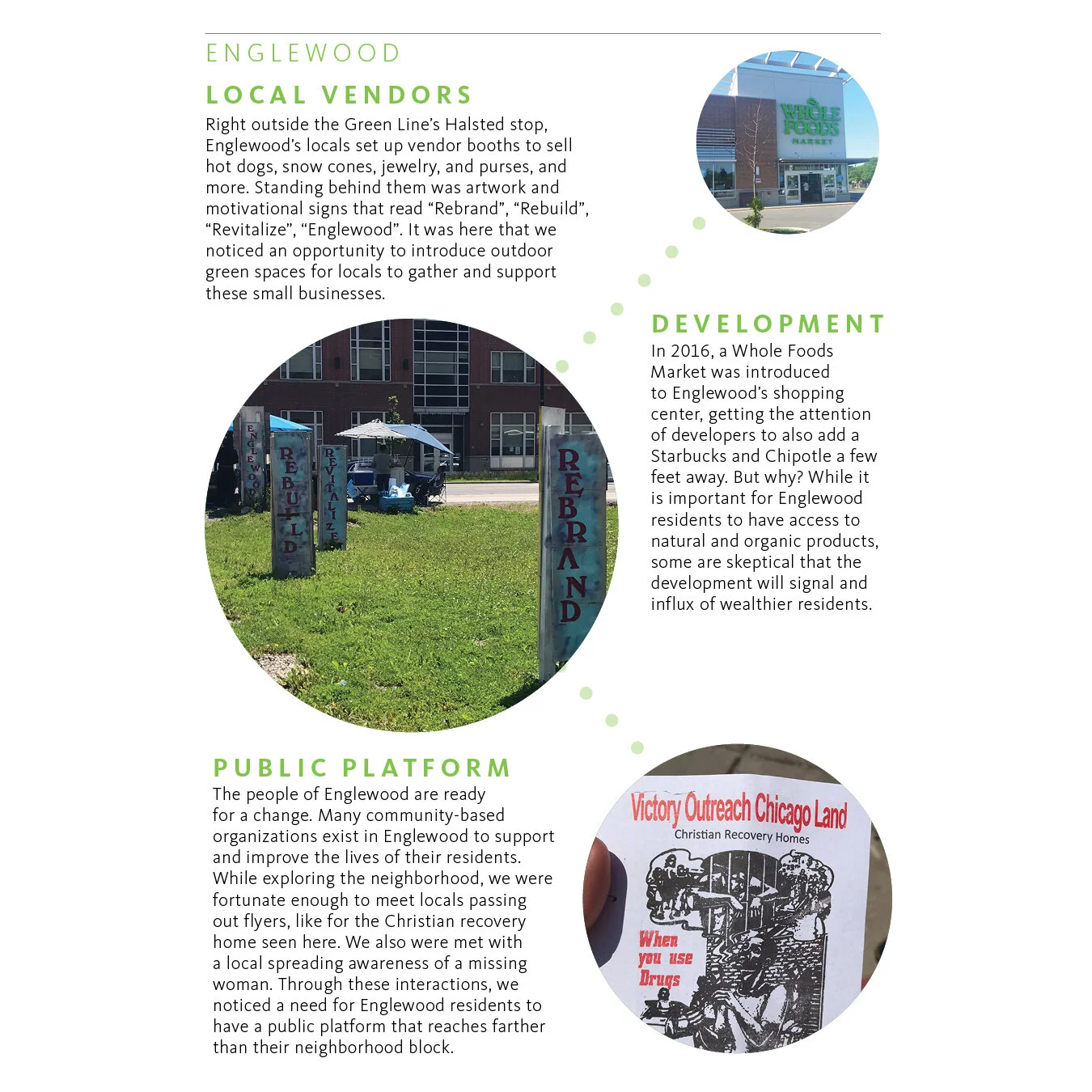
How might we…
Support existing initiatives?
Provide a public platform?
Encourage professional development?
Create more green spaces?
Impose education reform?
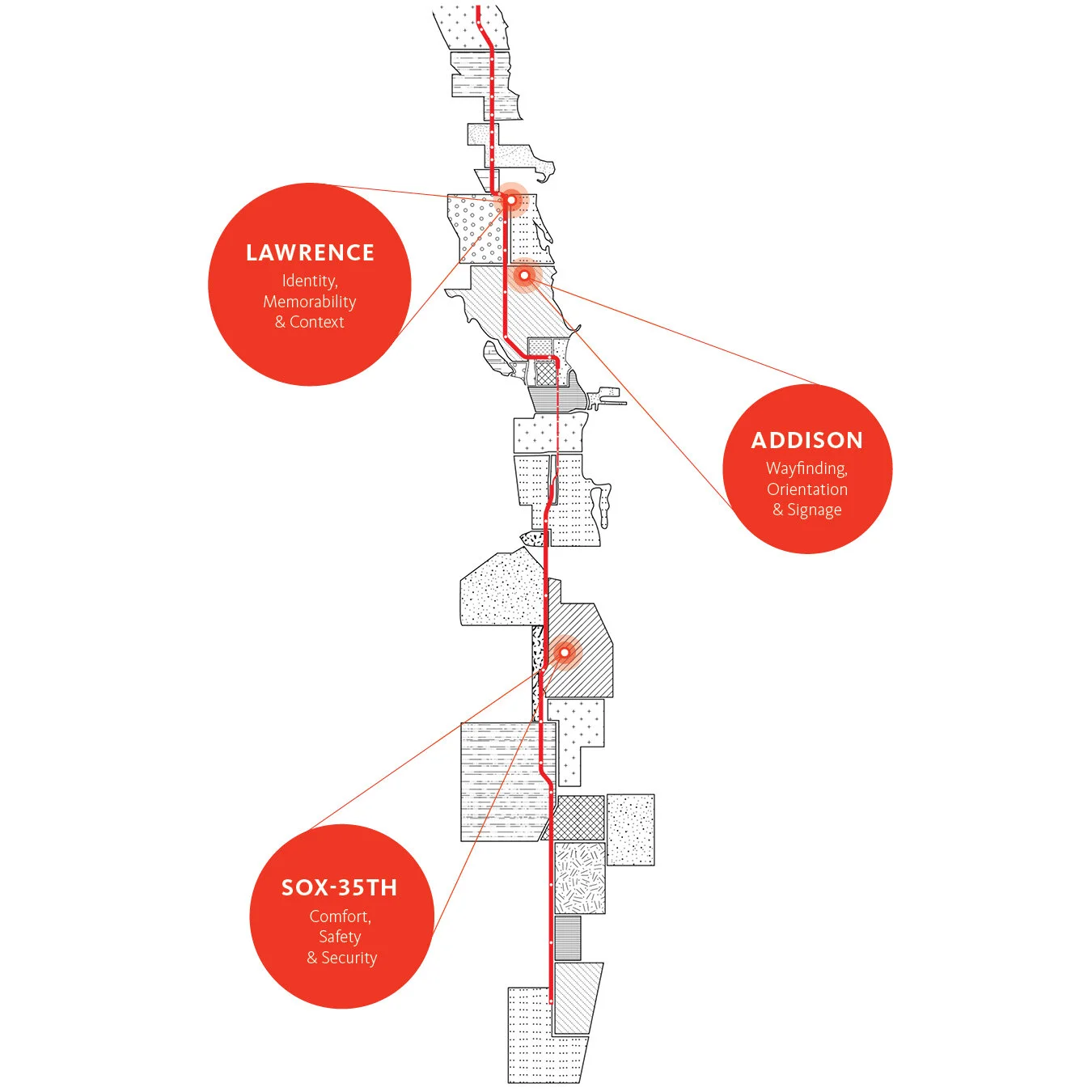
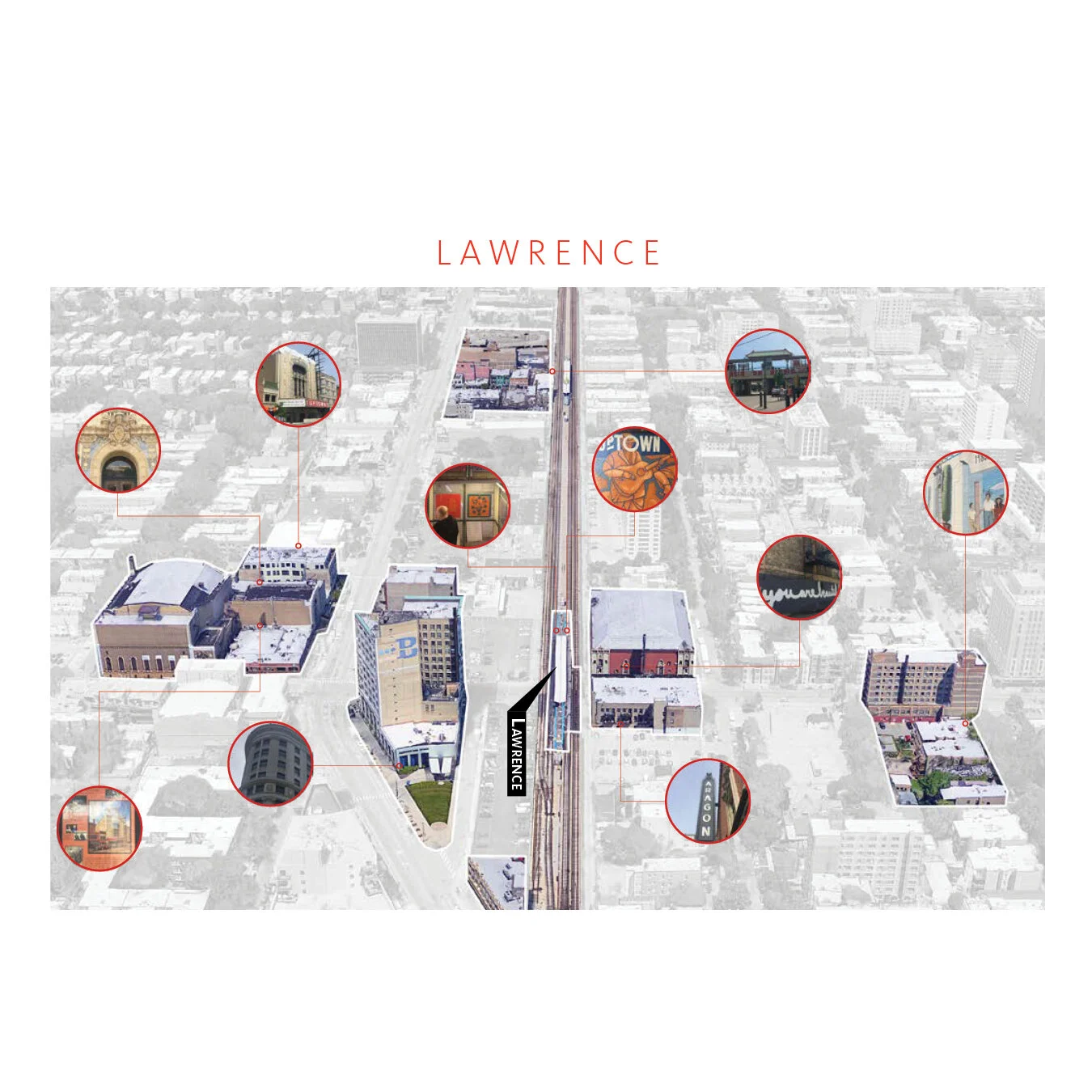
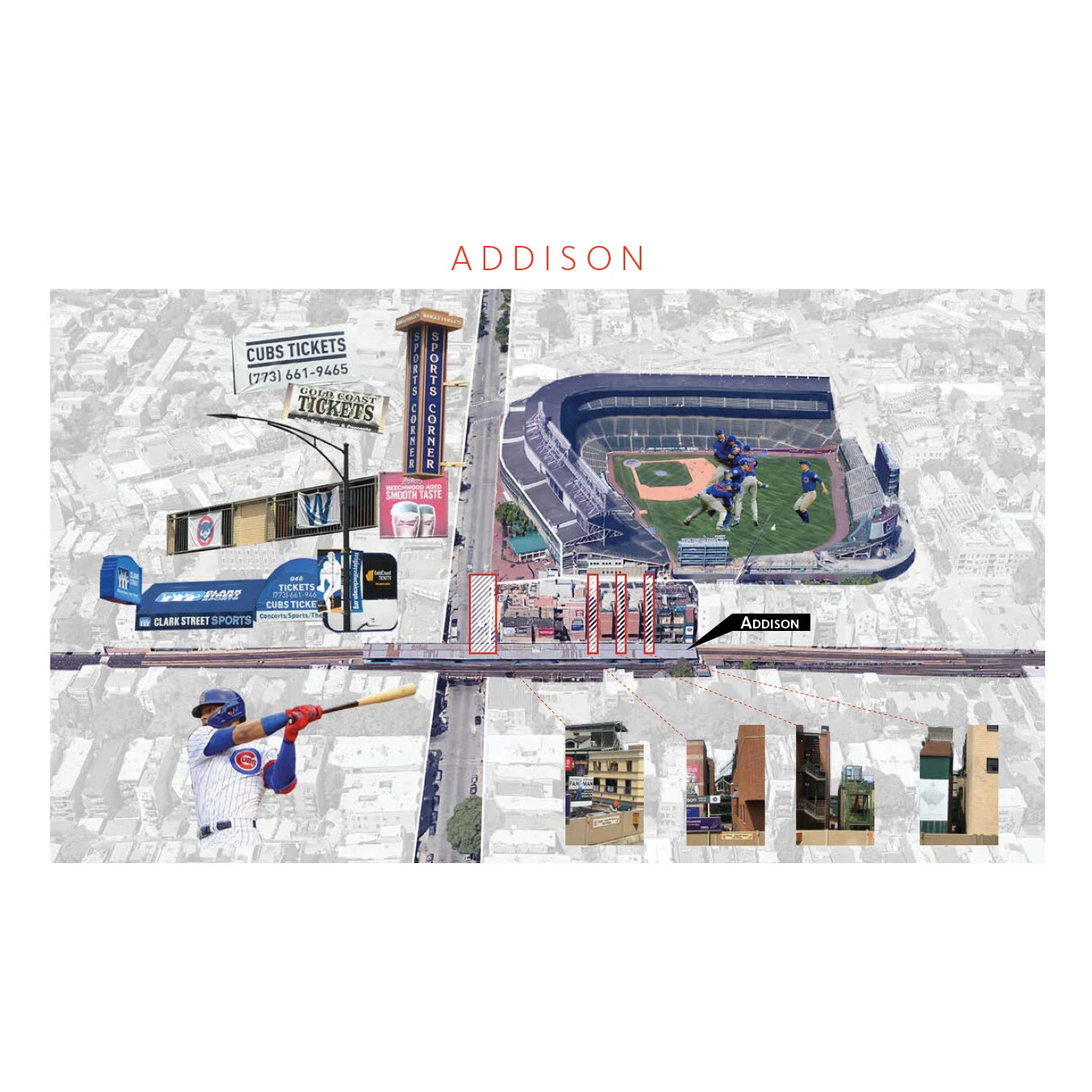
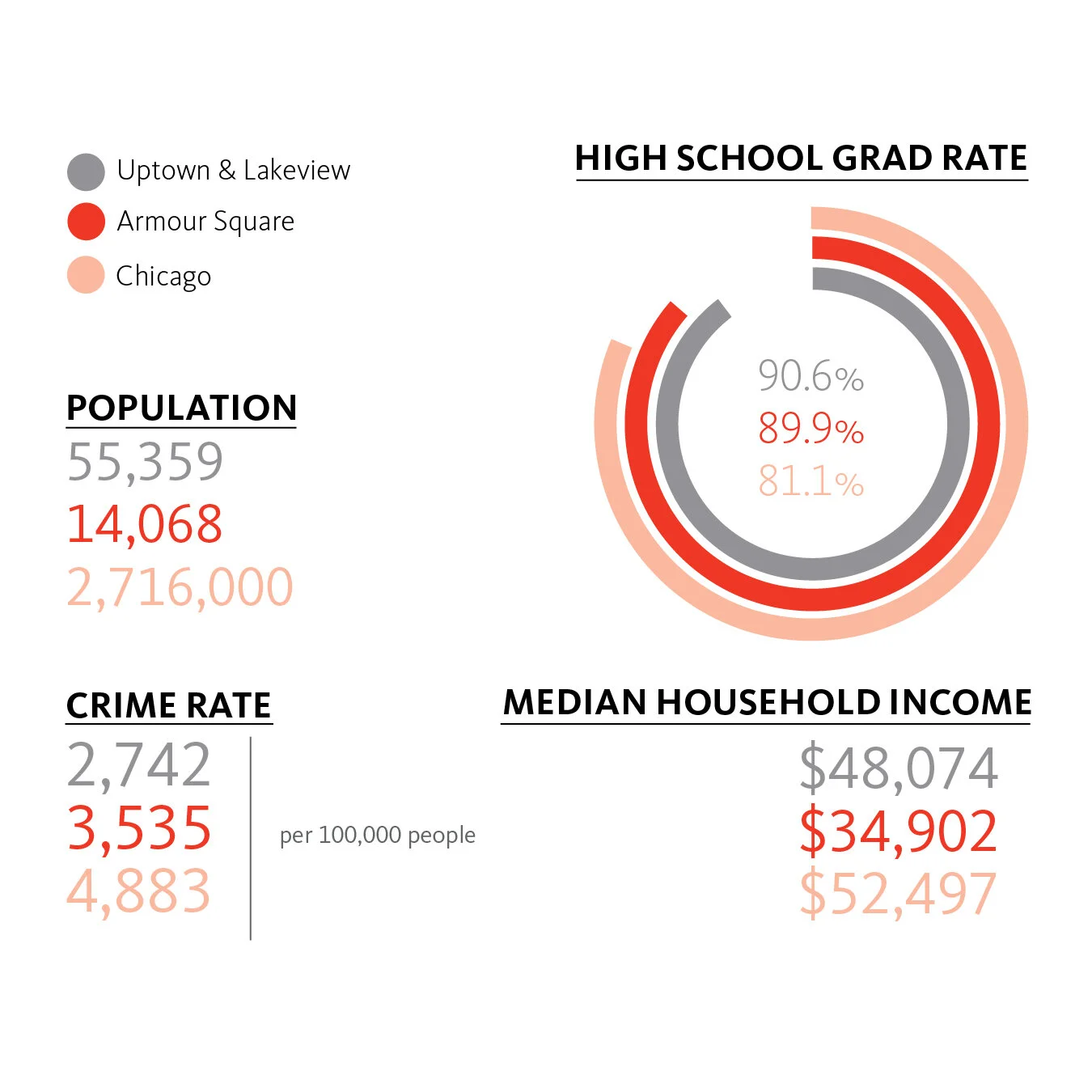
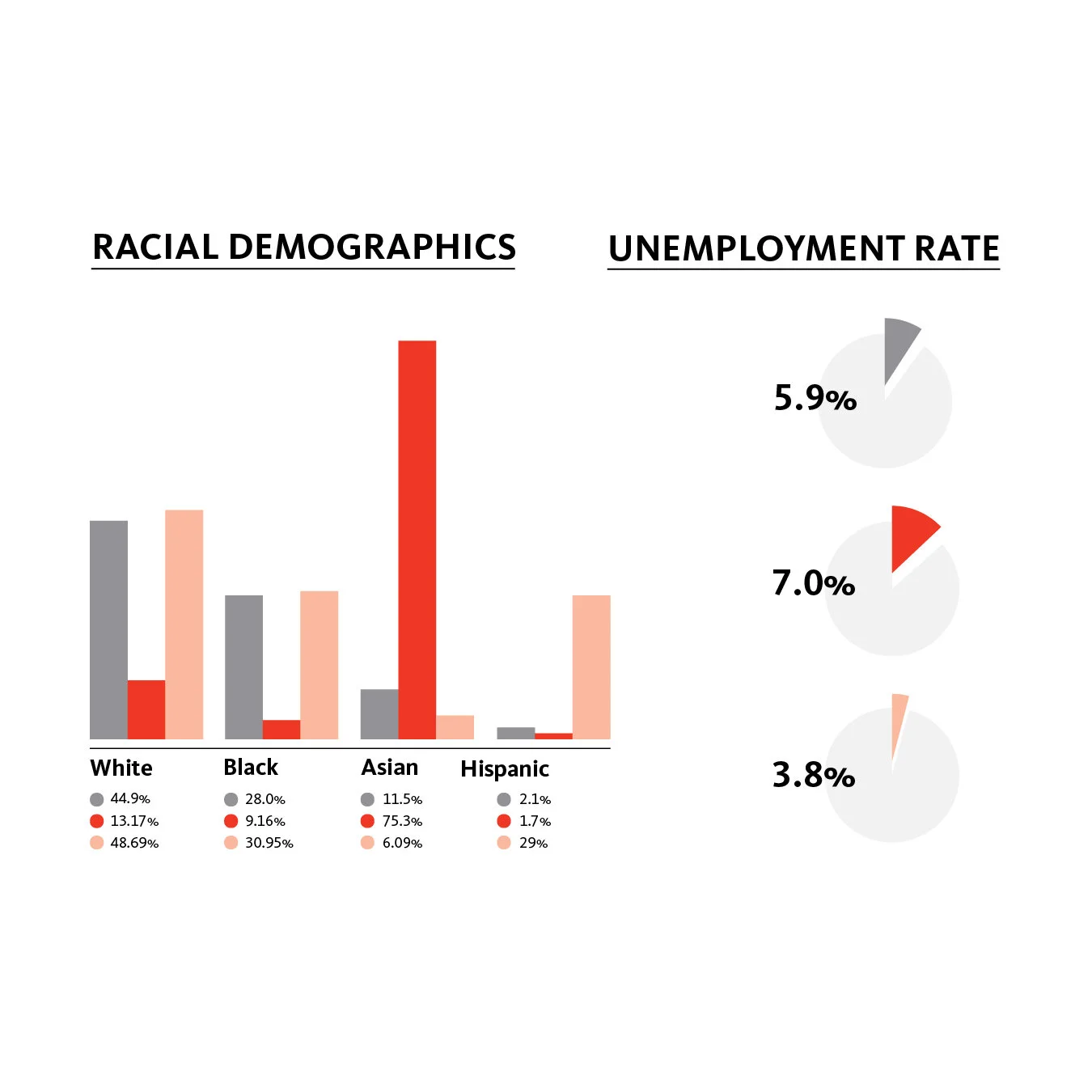
Chicago Red Line:
How might we…
Utilize the spaces between buildings and the station?
Establish a connection between communities?
Reinforce a sense of orientation?
Boost the comfort of commuters?
Reflect neighborhood identity?
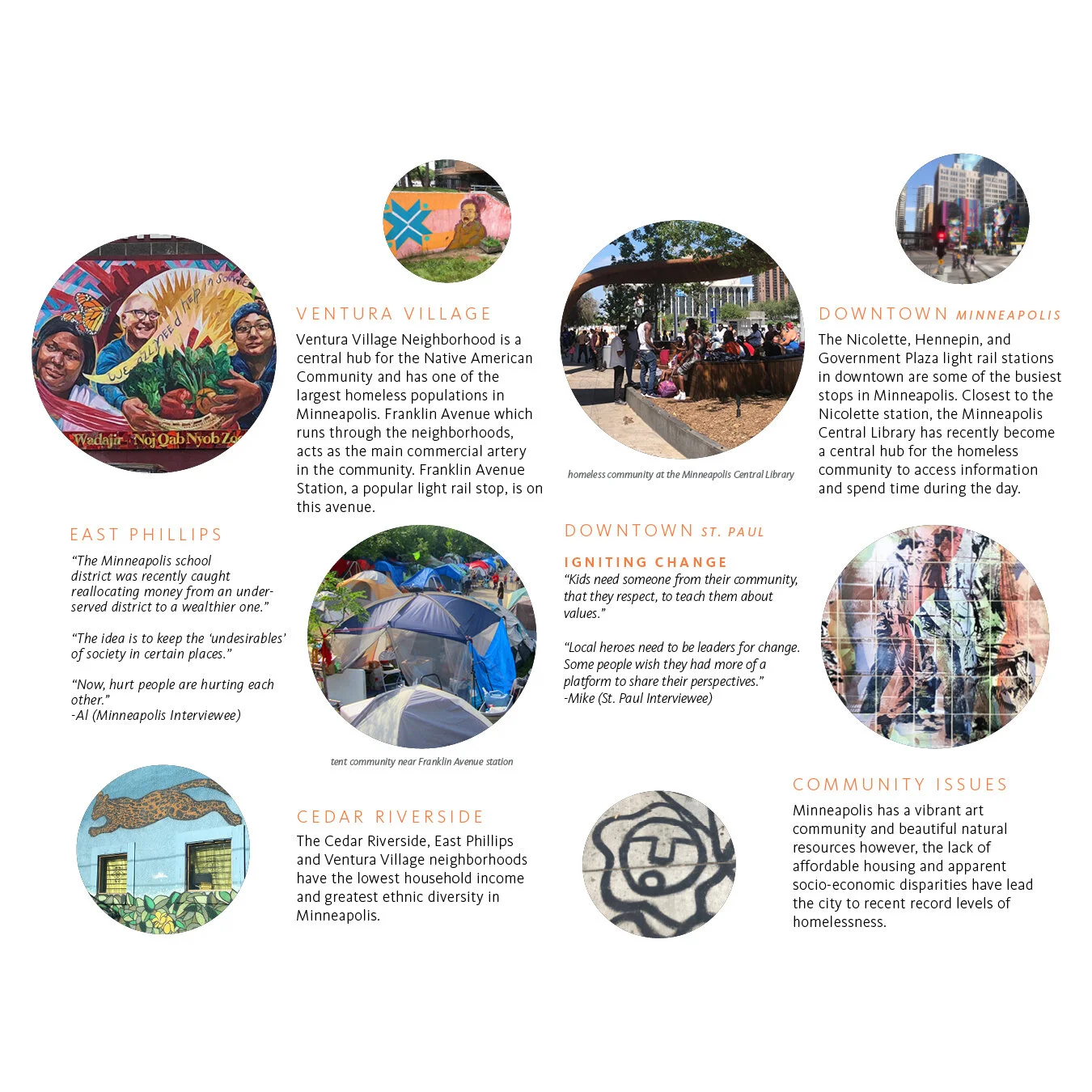
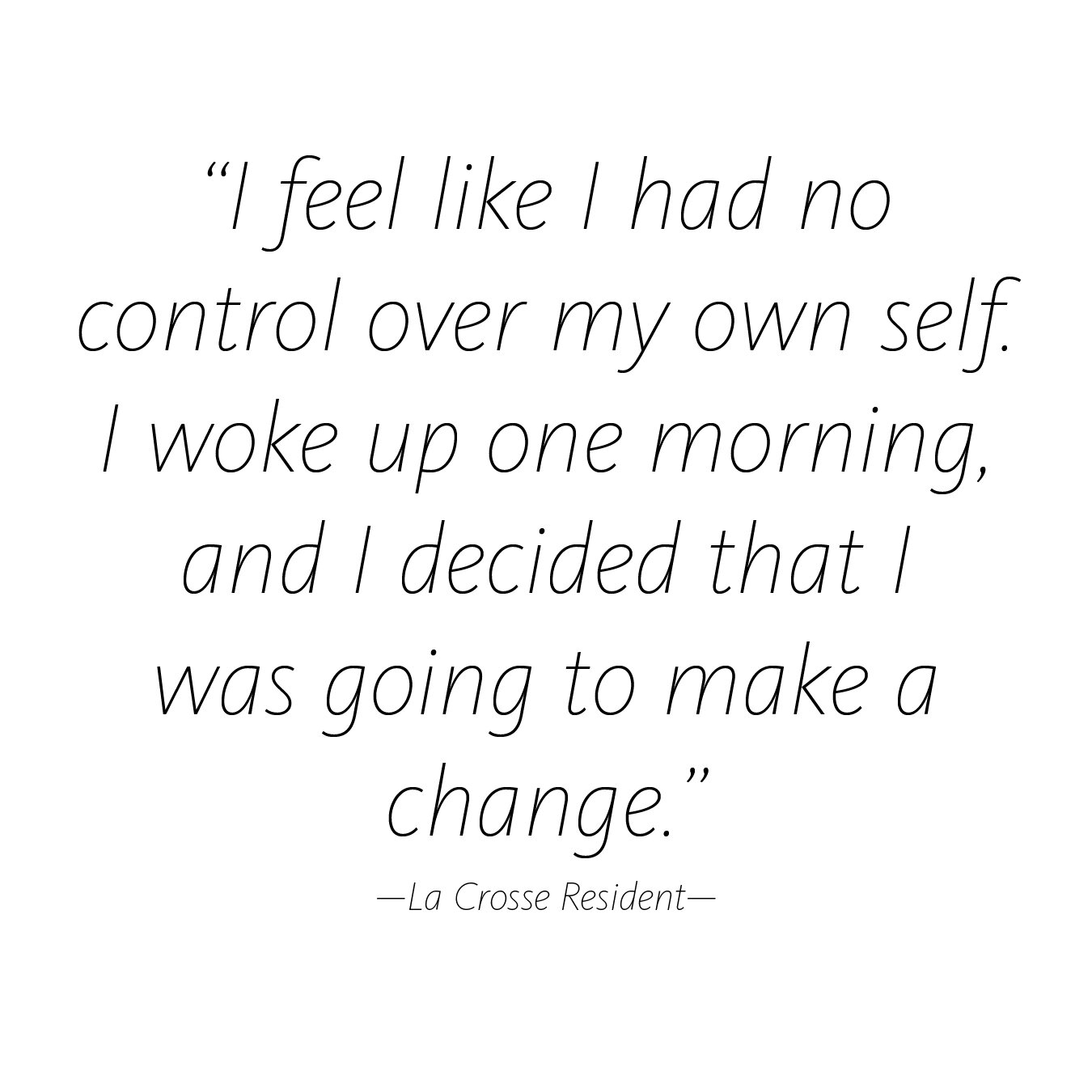
Minneapolis and La Crosse:
How might we…
Decrease the divide between social classes?
Improve access to necessities?
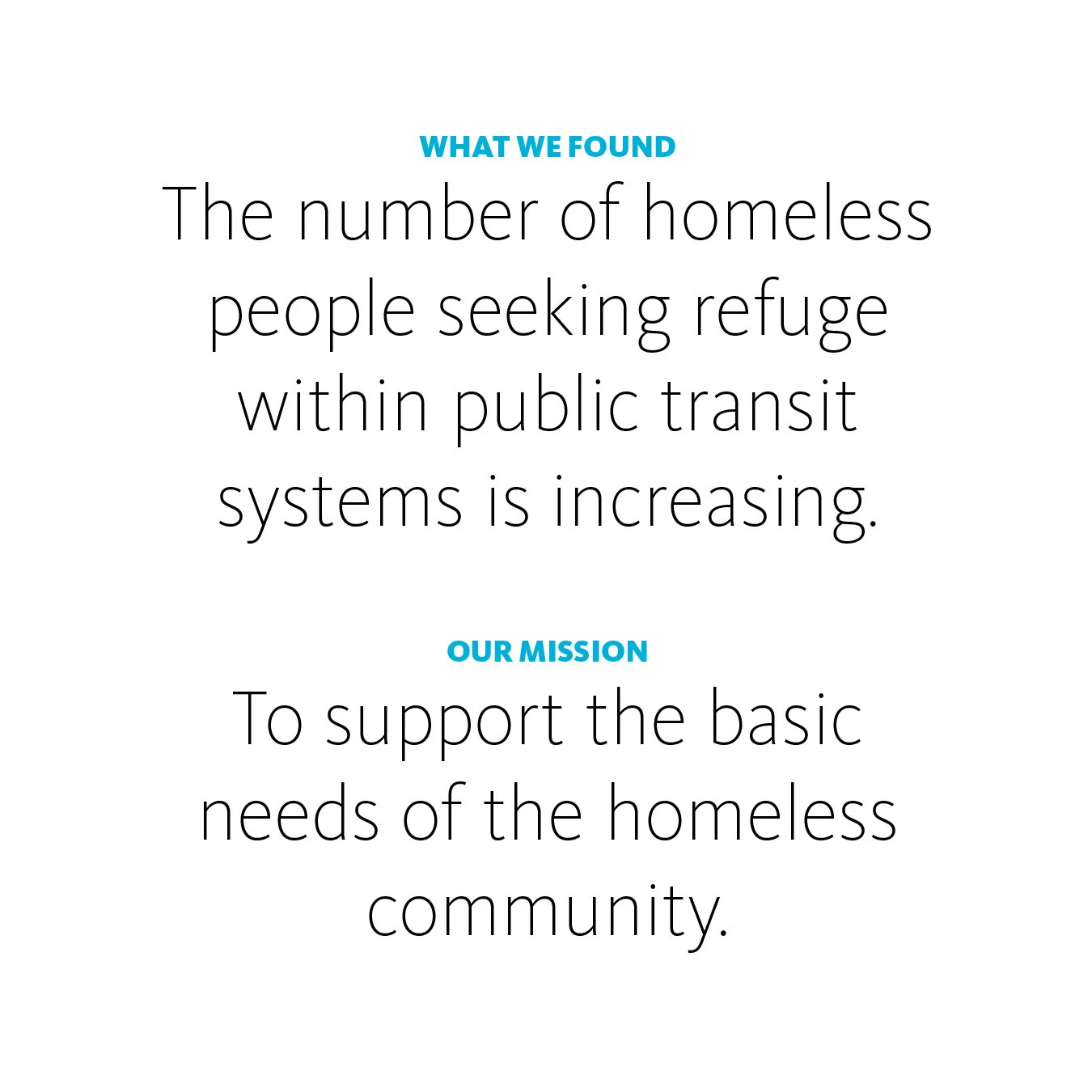
Provide shelter to the homeless?
Promote desegregation?
02/04
Concept Ideation
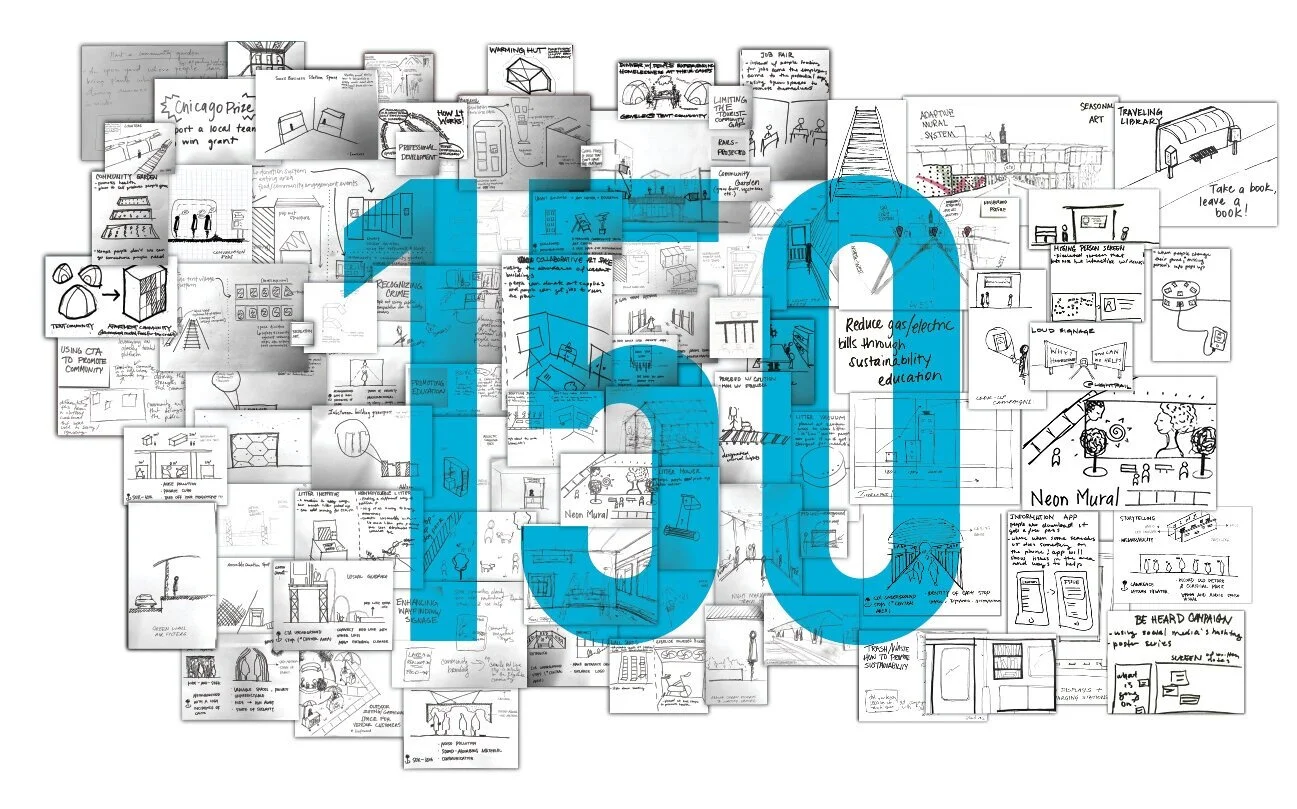
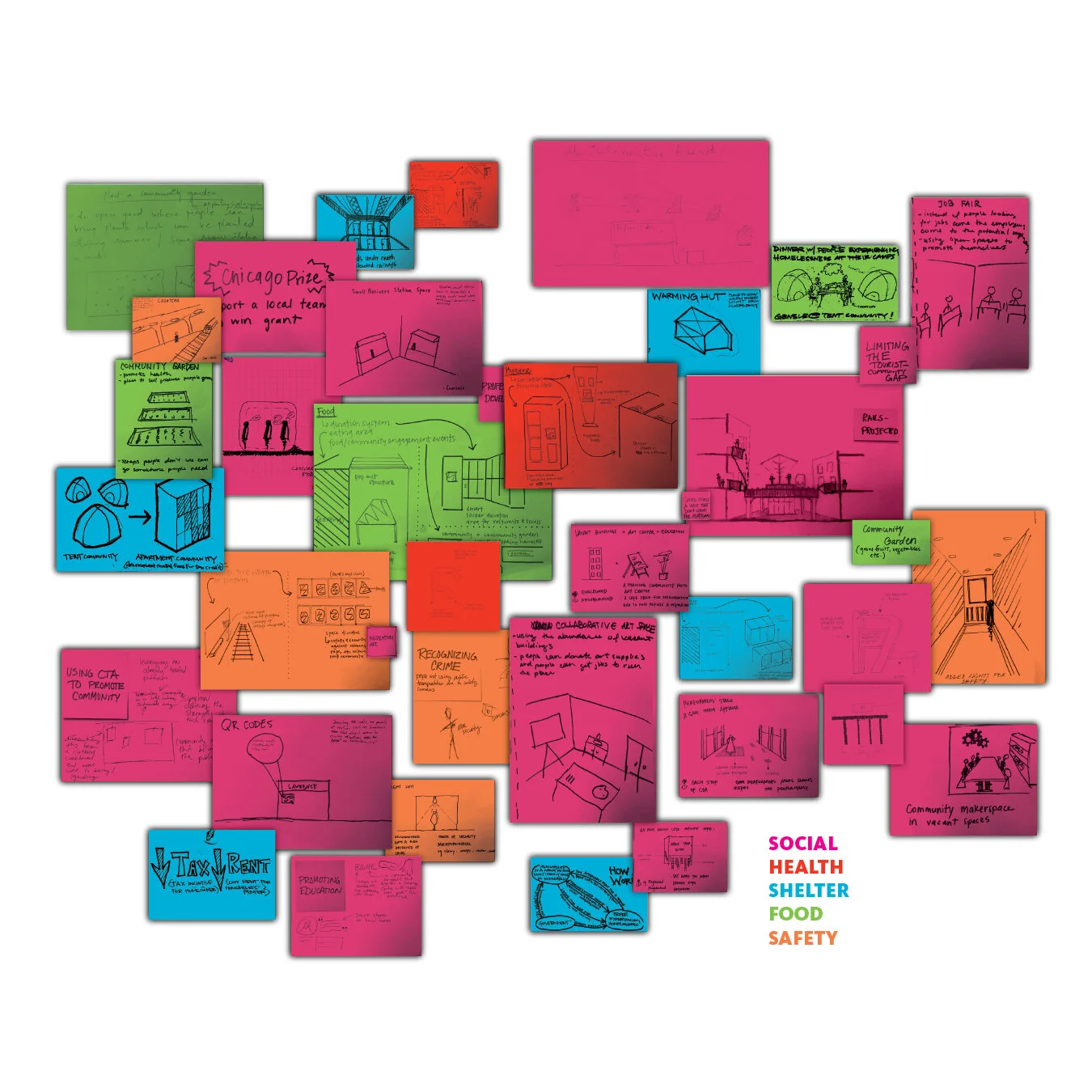
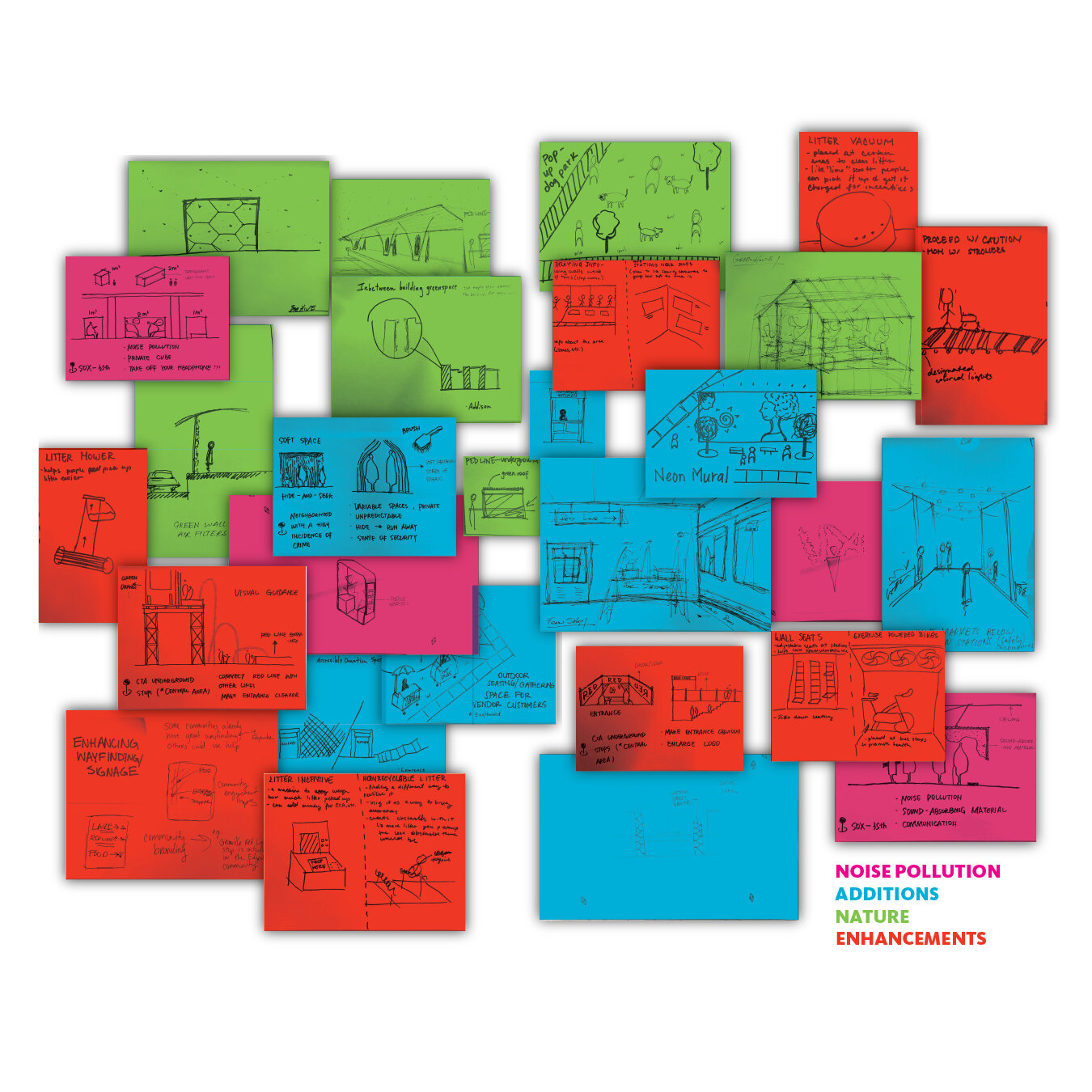
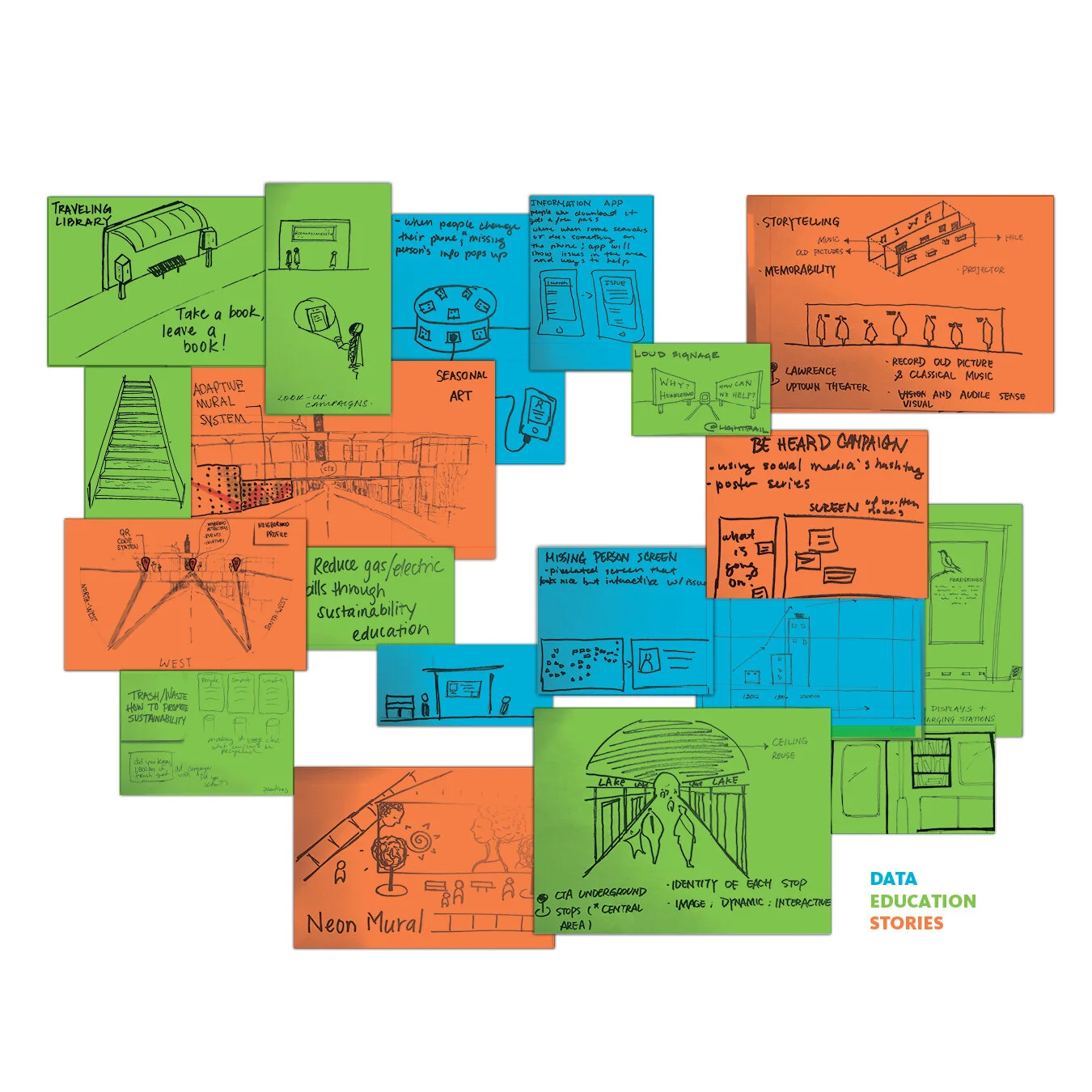
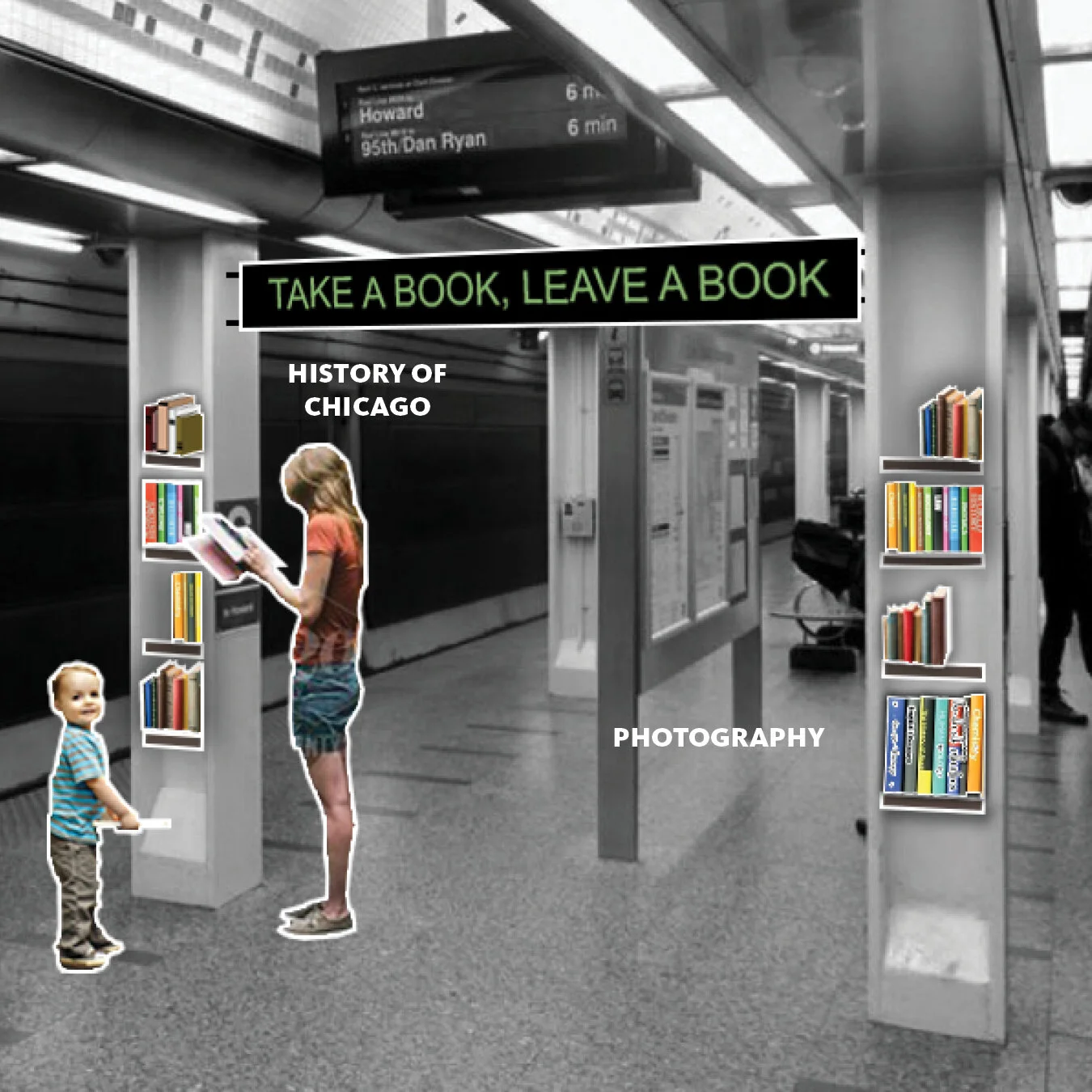
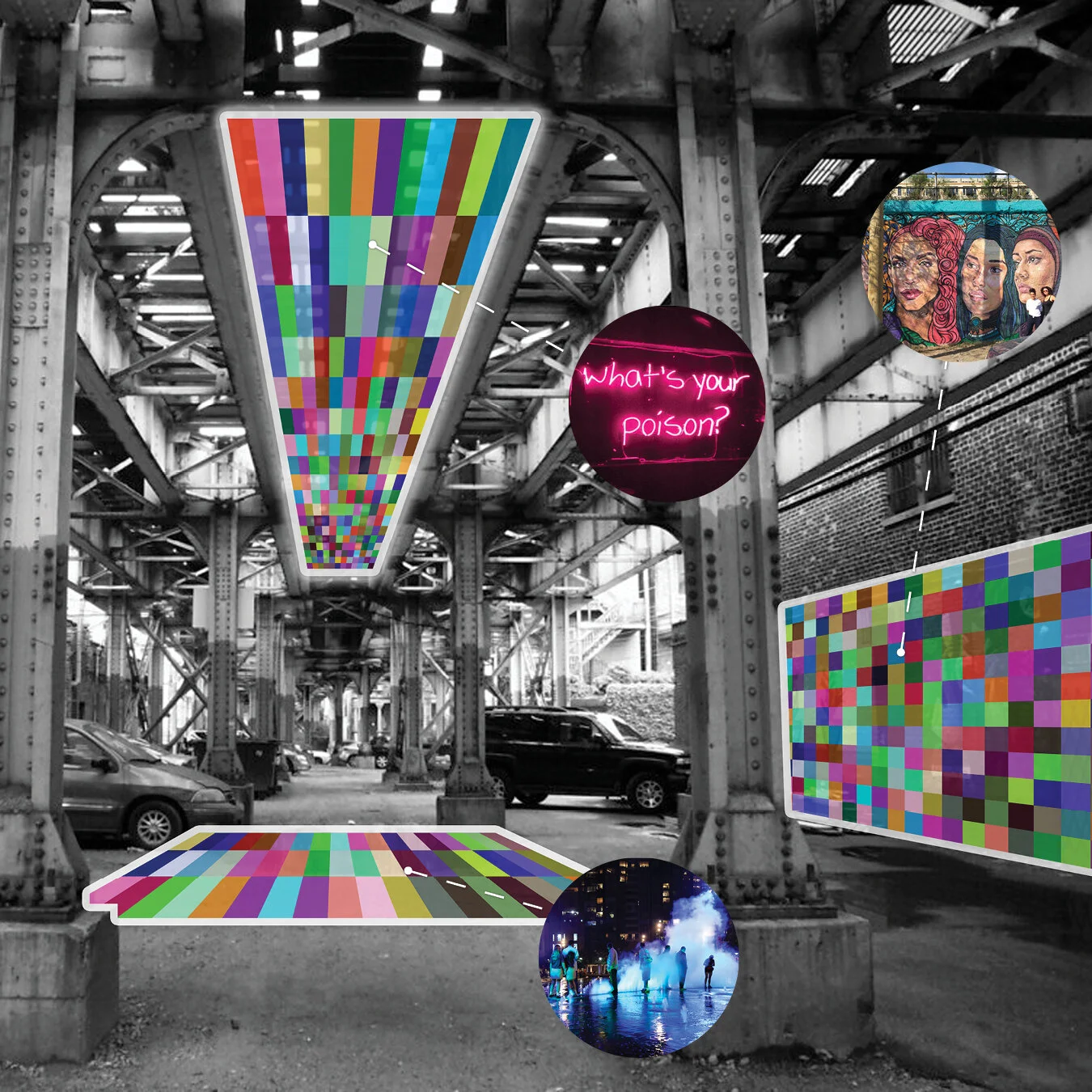
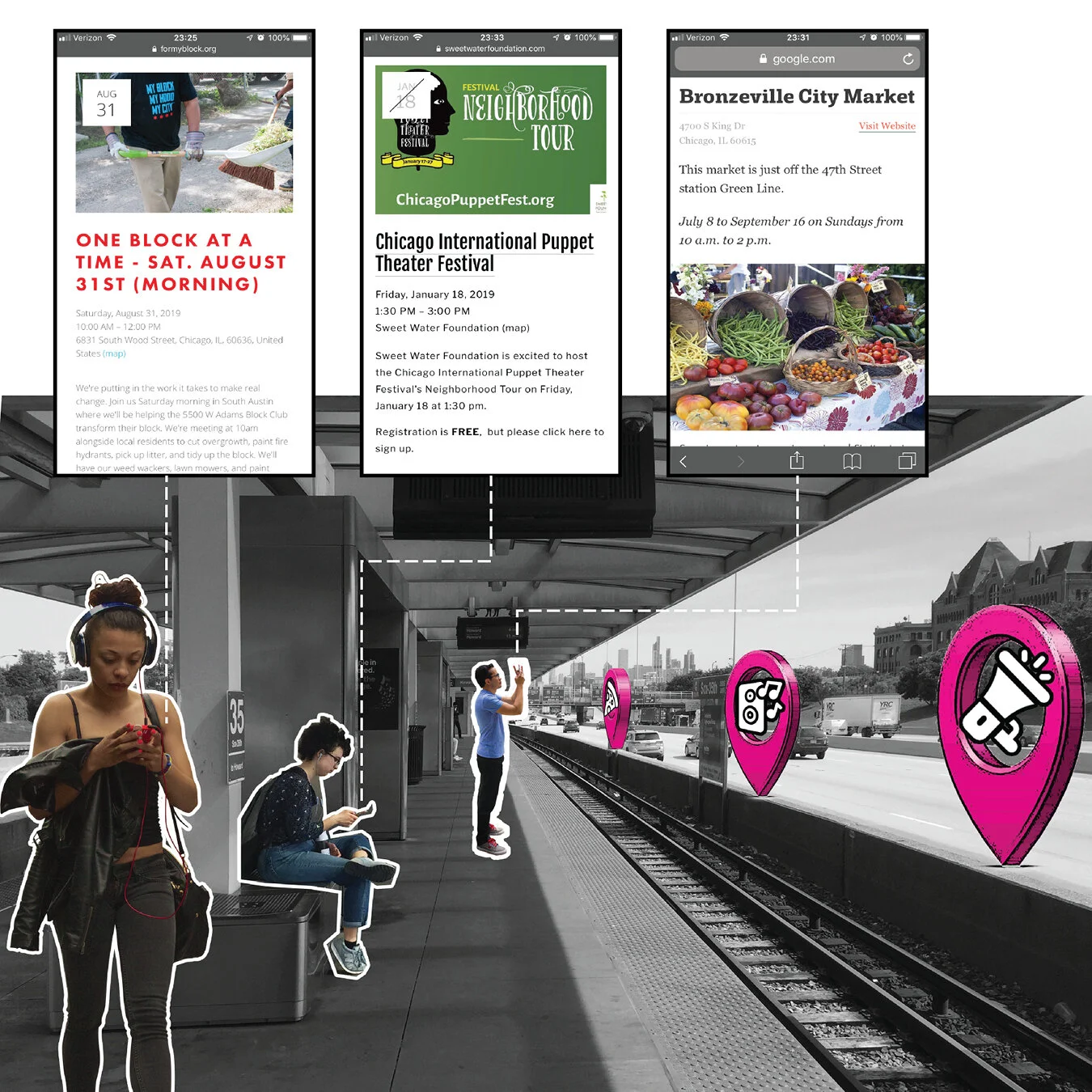
Informed by the exploration phase research and inspired by the communities we explored, we ideated 150 interventions. Then, based on stakeholder input, user testing, and secondary research 9 of the interventions were selected to be developed further.
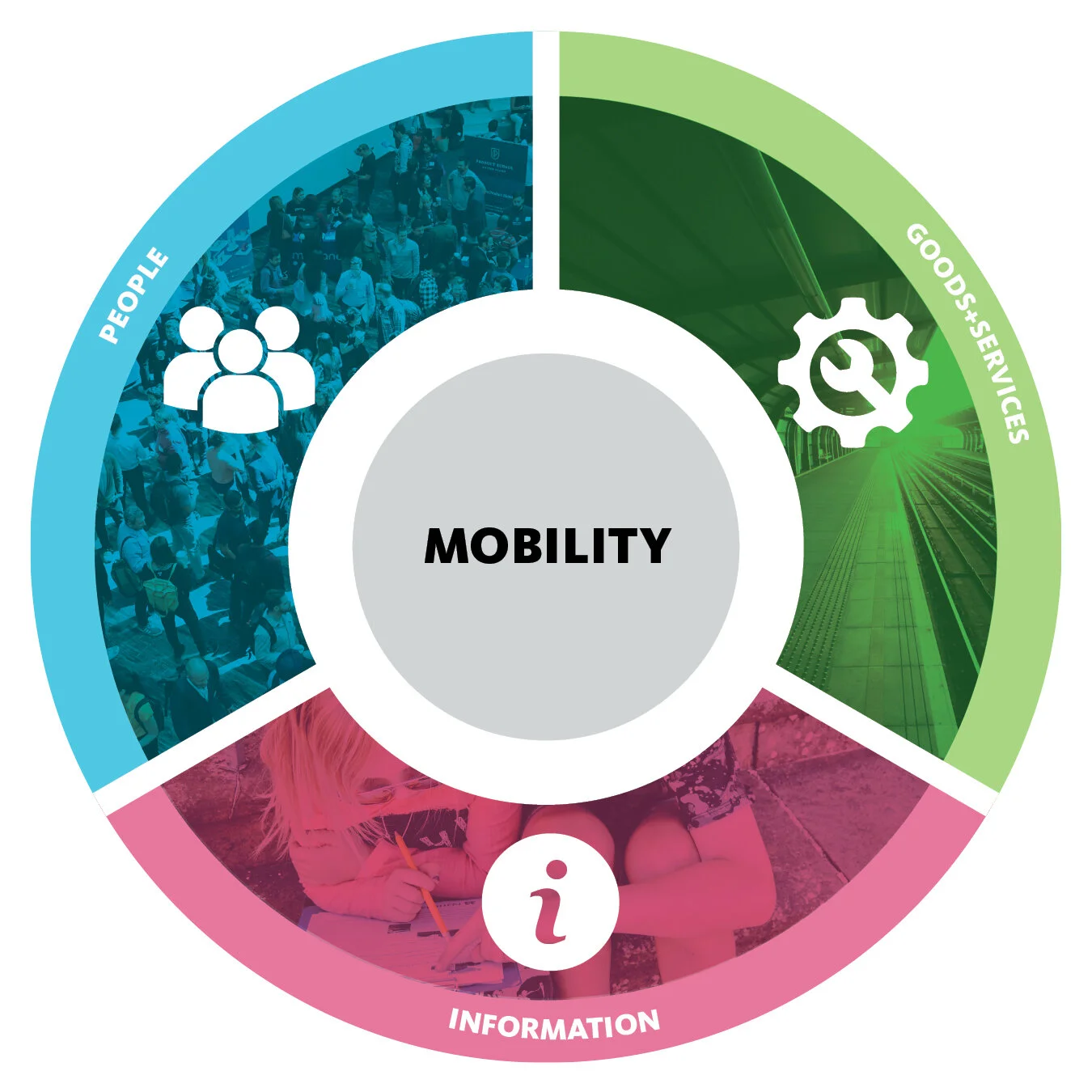
Rallying Framework: Mobility in Communities
Defined as the Movement of People, Goods + Services, and Information.
People / Well-being, Safety, Residences, Jobs, Accessibility, Wayfinding, Inclusion, Community, Purpose
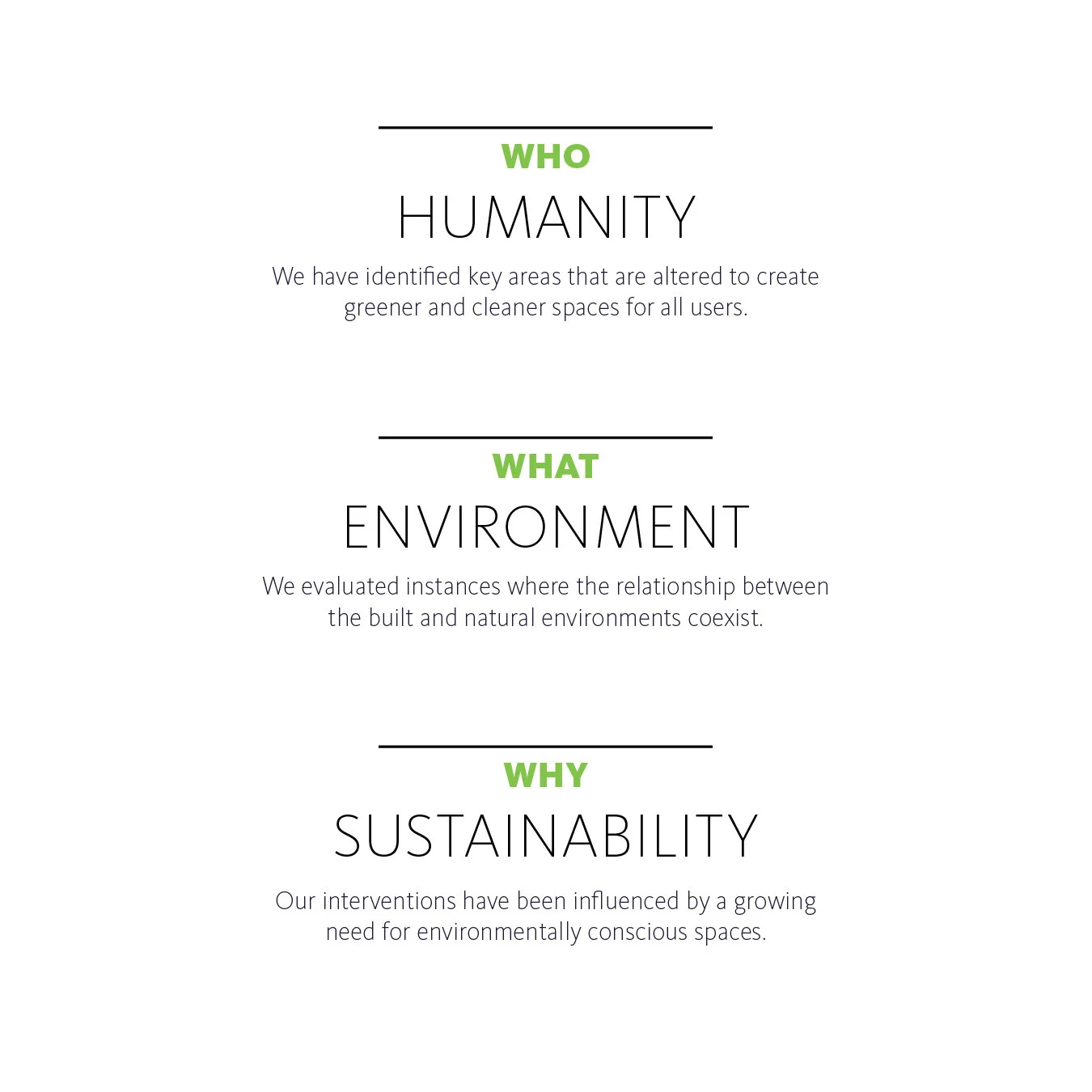
Goods + Services / Economic Development, Utilities, Entertainment, Retail, Produce, Sustainability, Green spaces, Waste
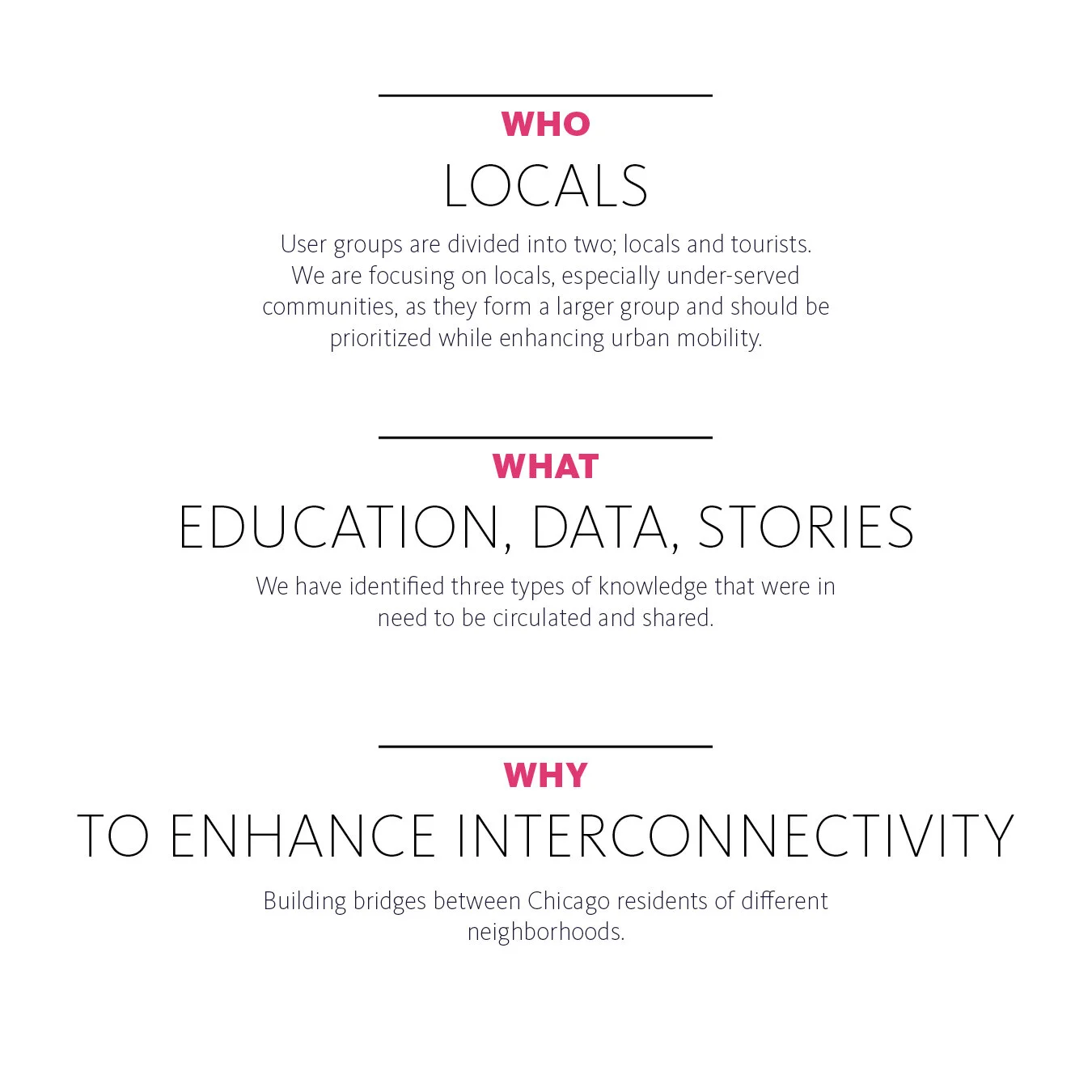
Information / Education, Public Platform, Community Programming, Media, Technology, Wayfinding
03/04
Prioritization
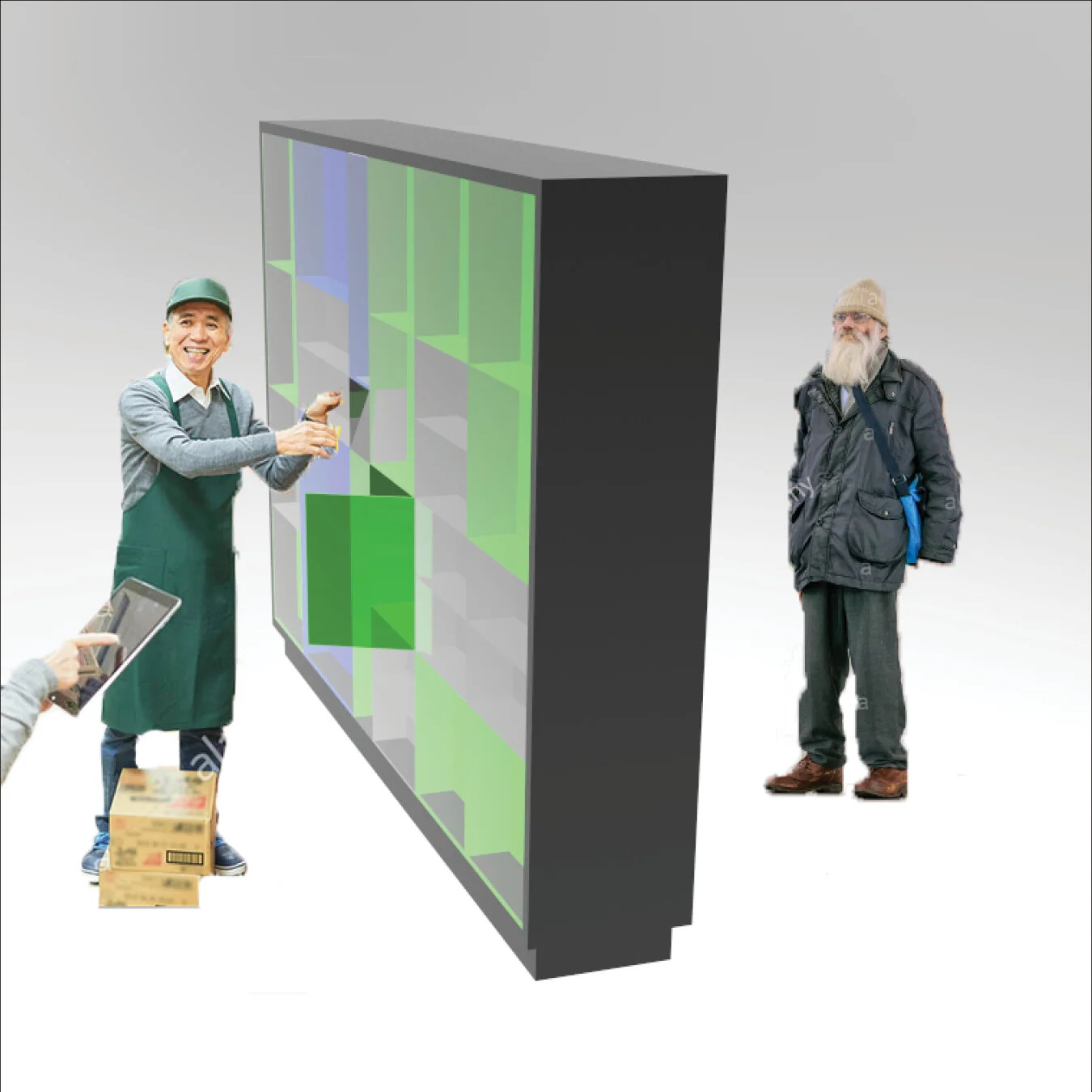
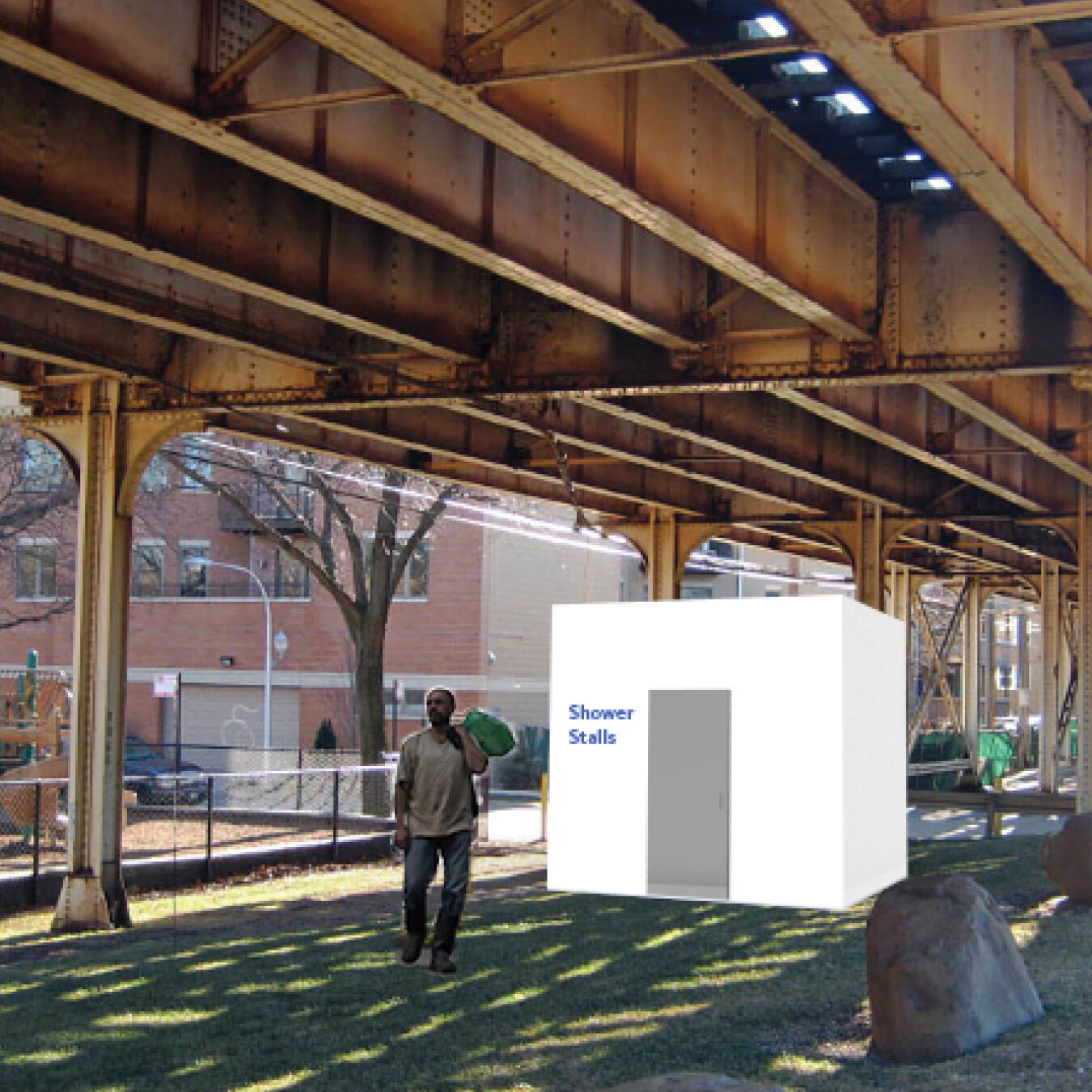
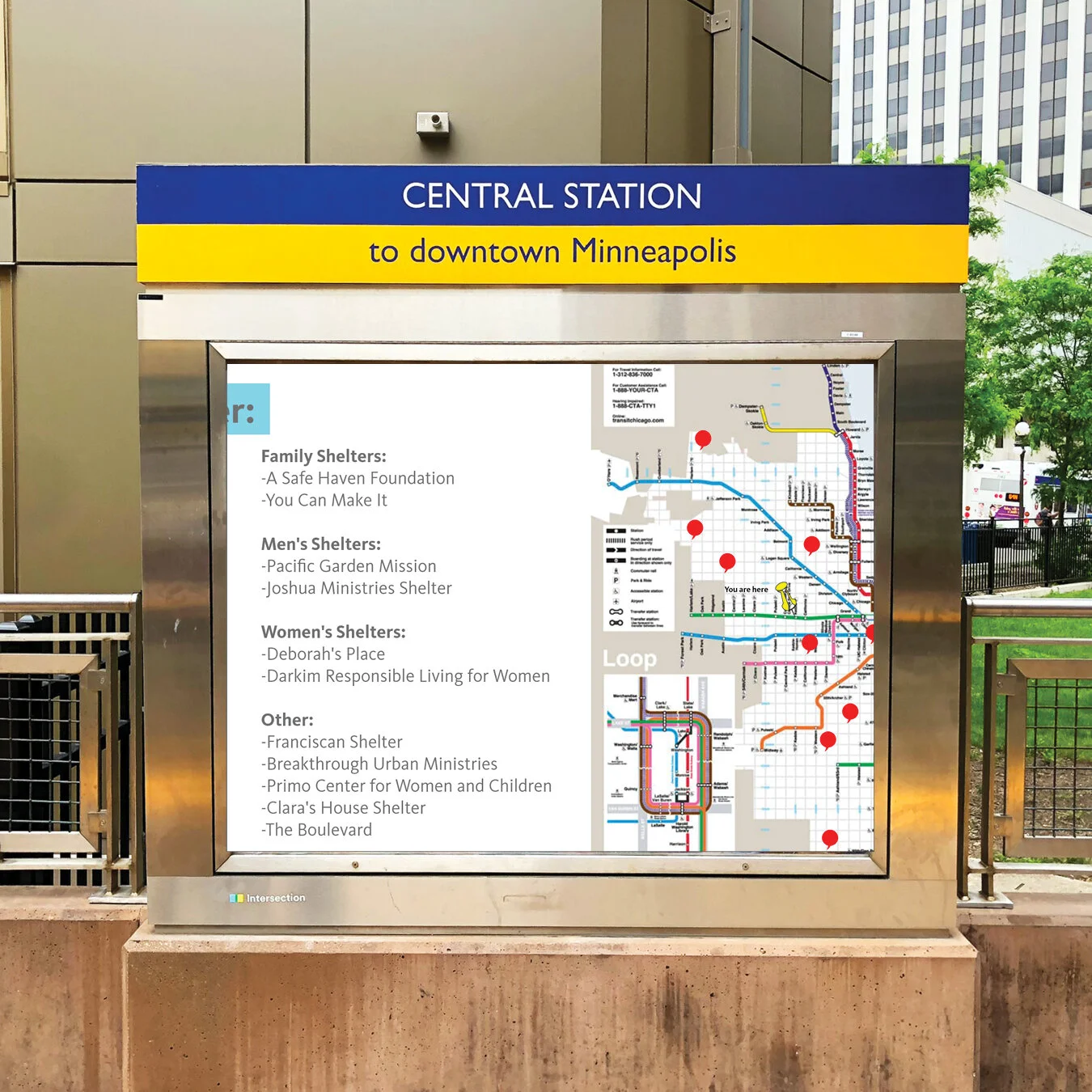
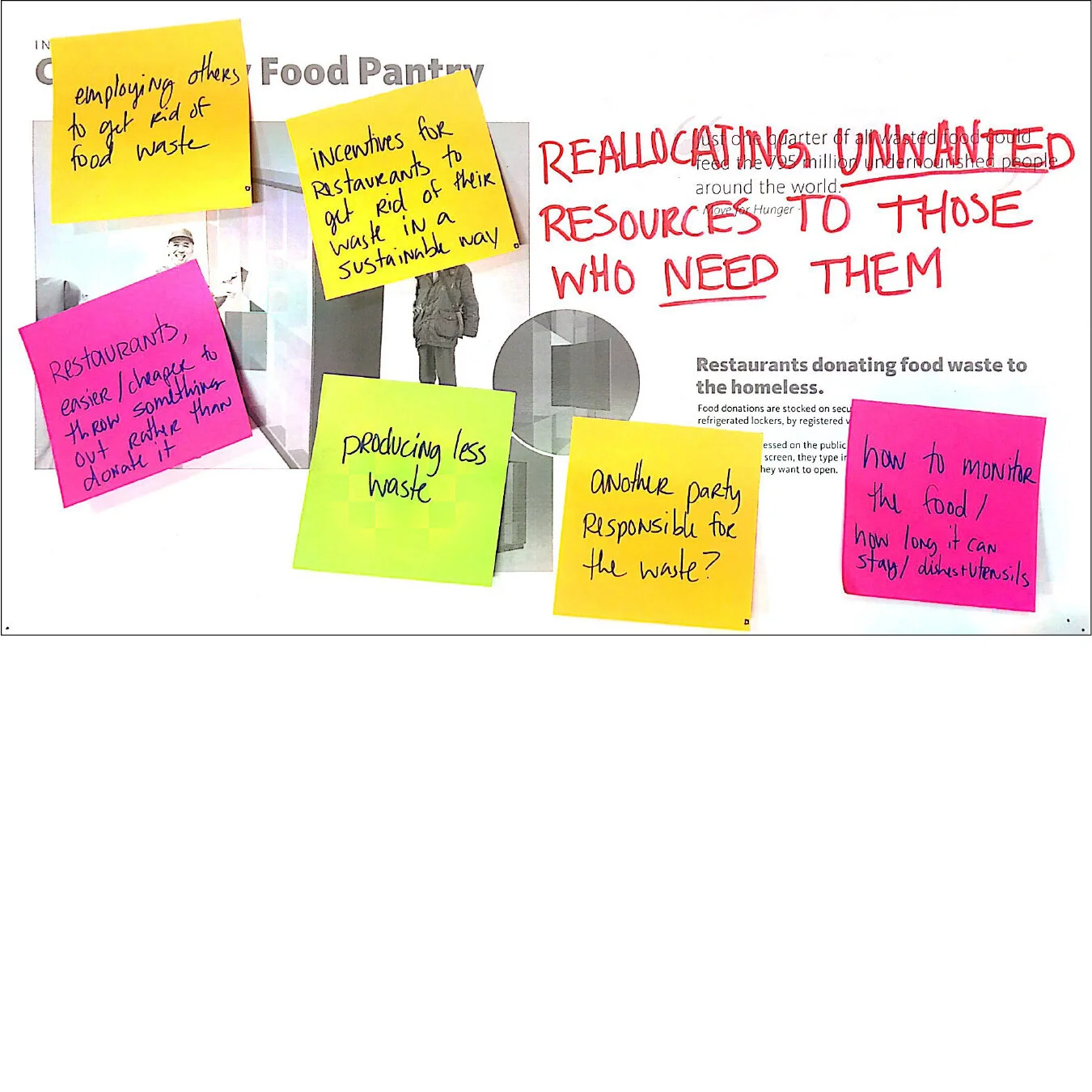
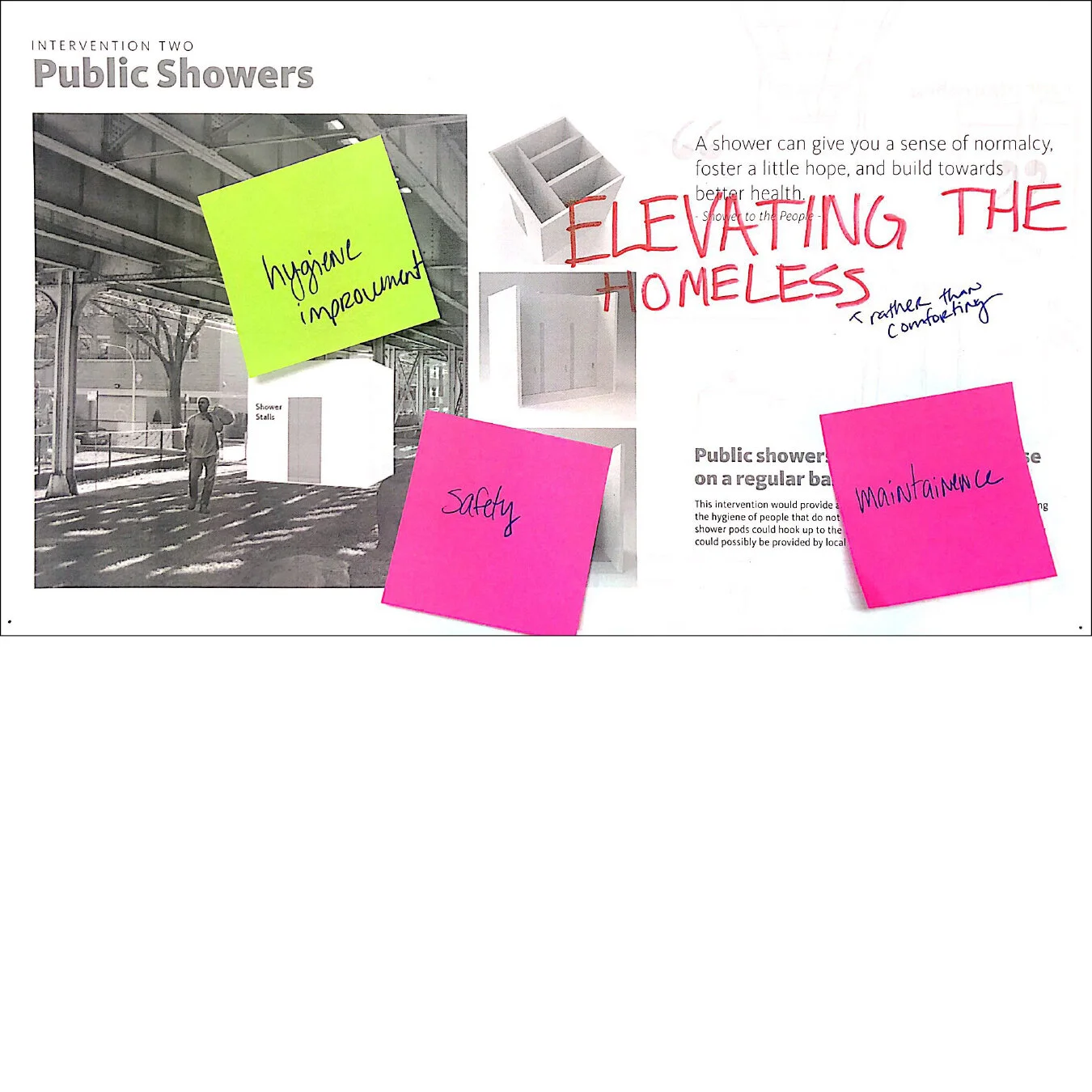
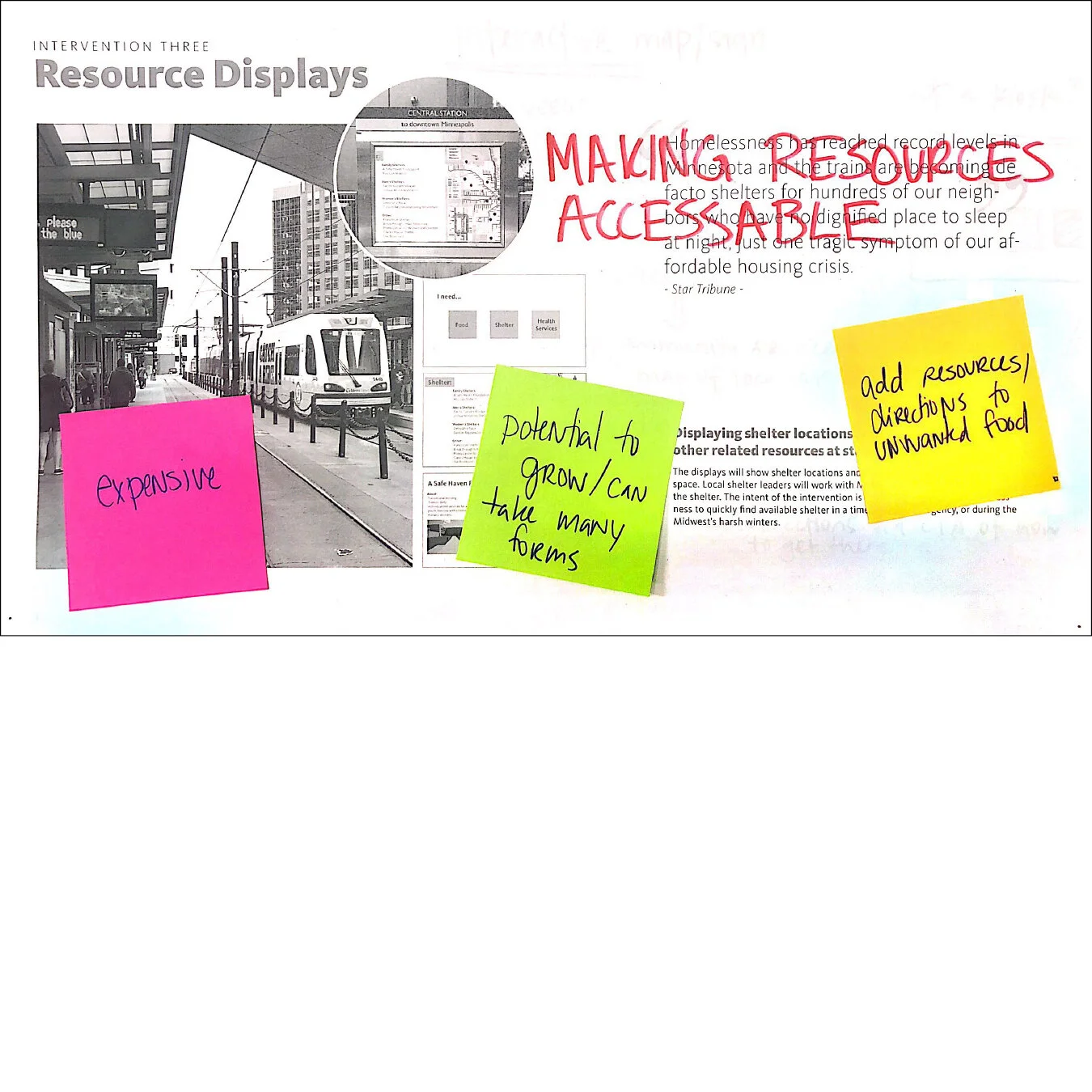
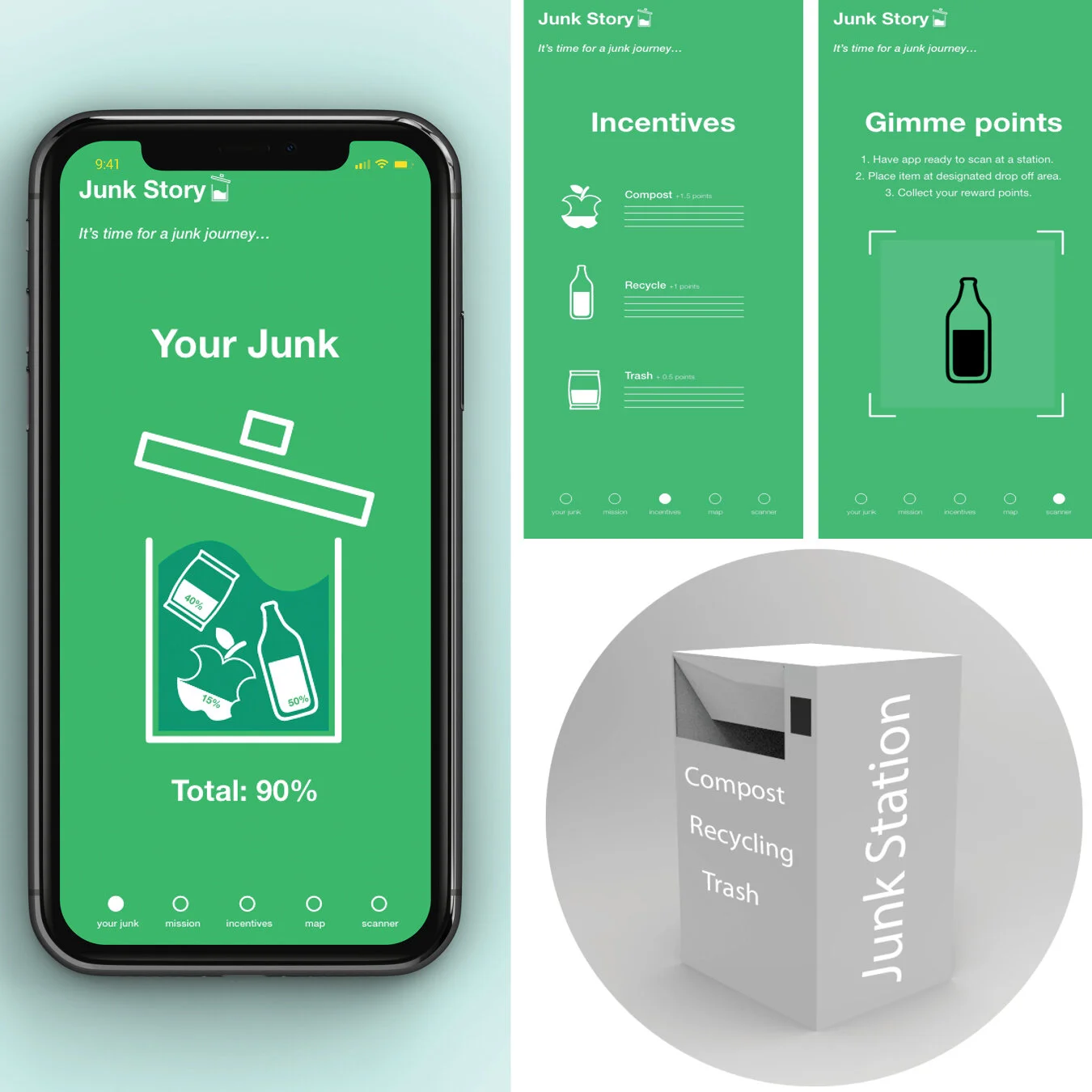
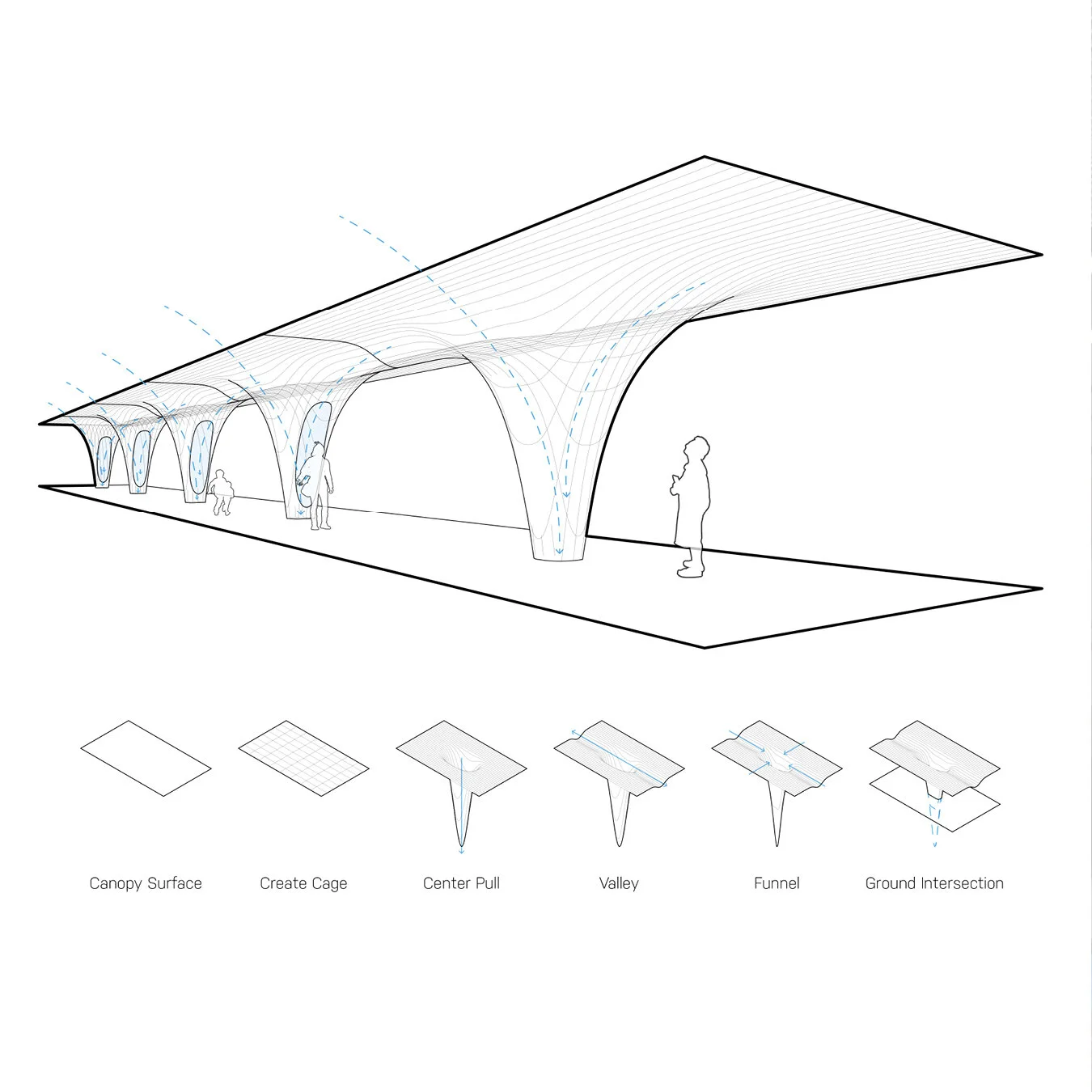
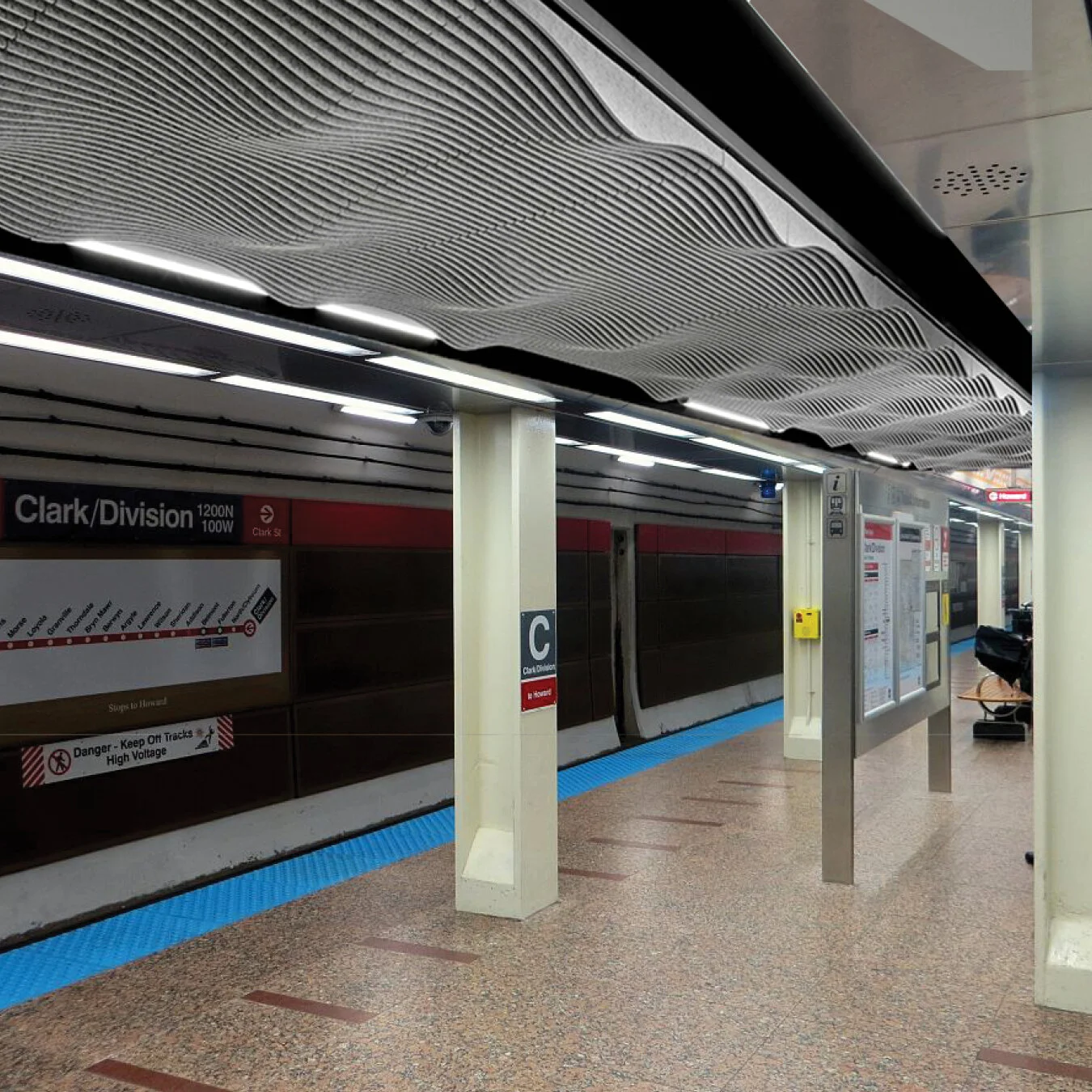
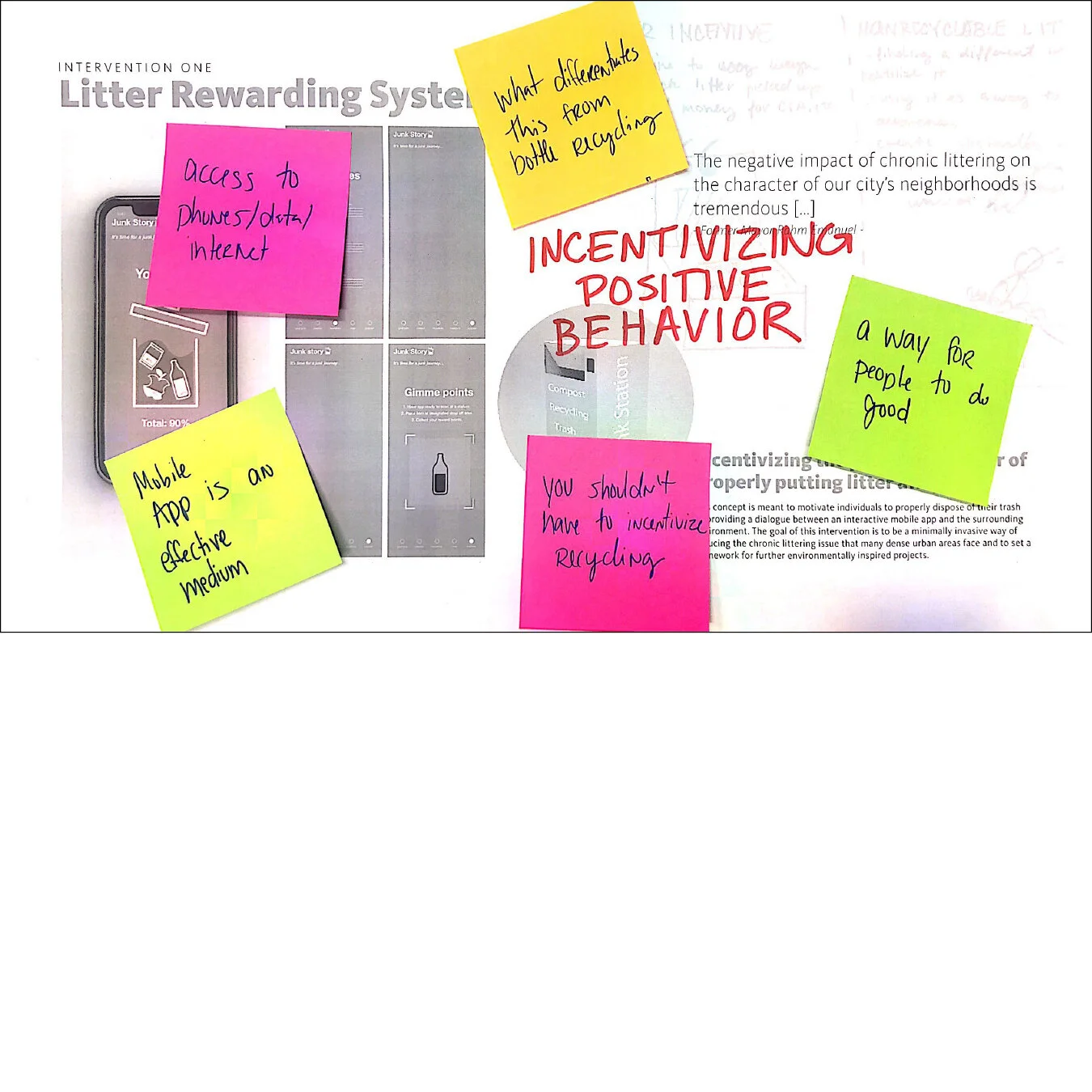
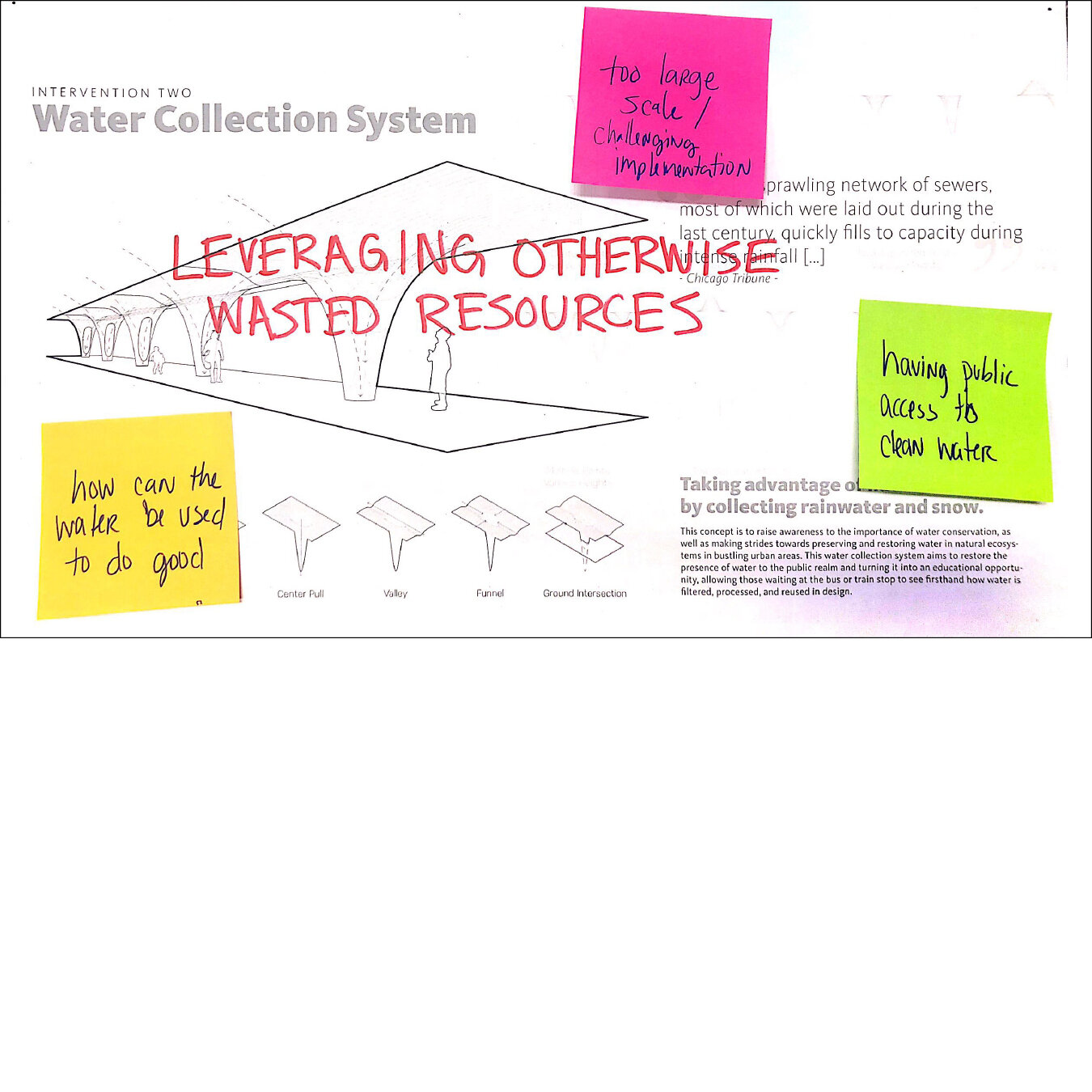
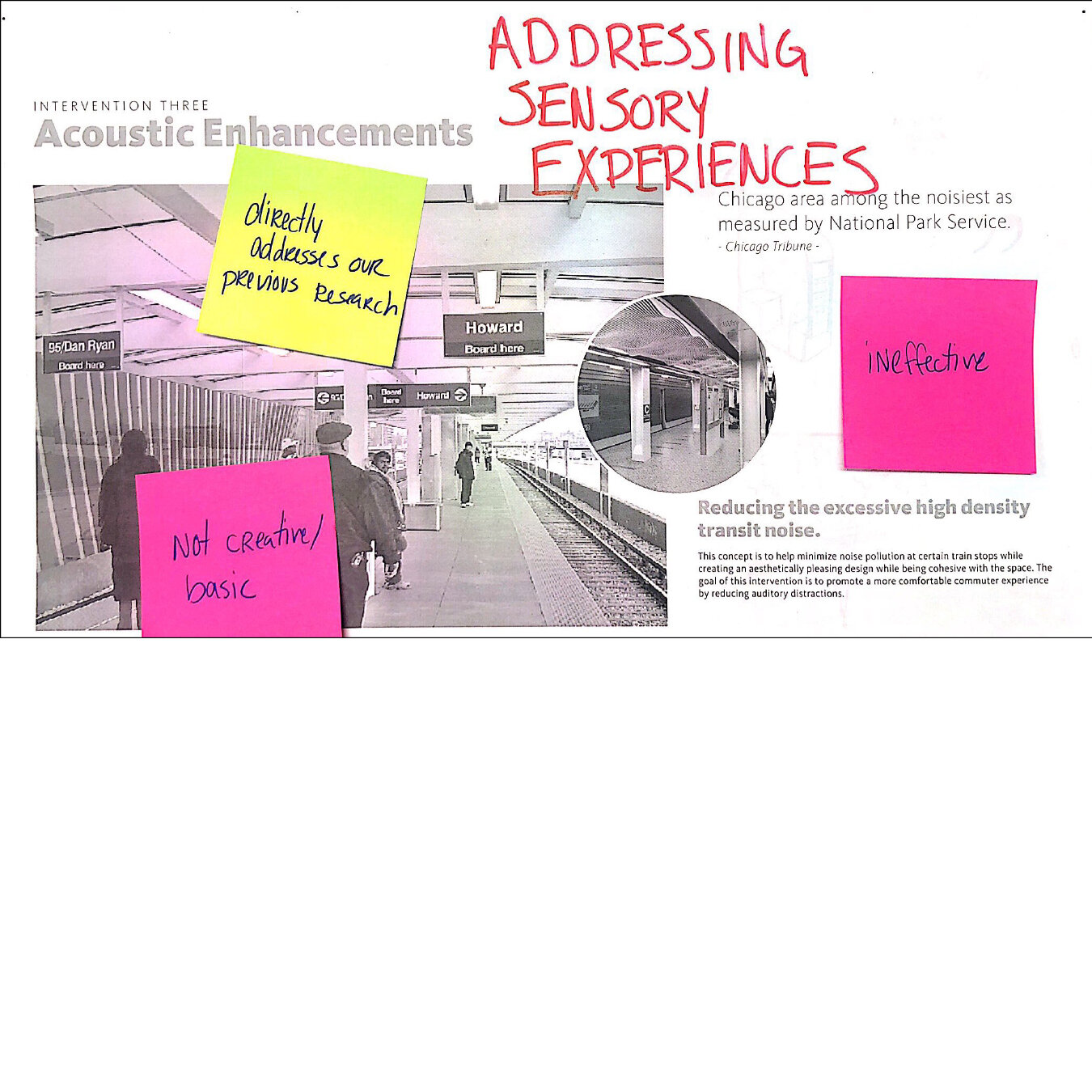
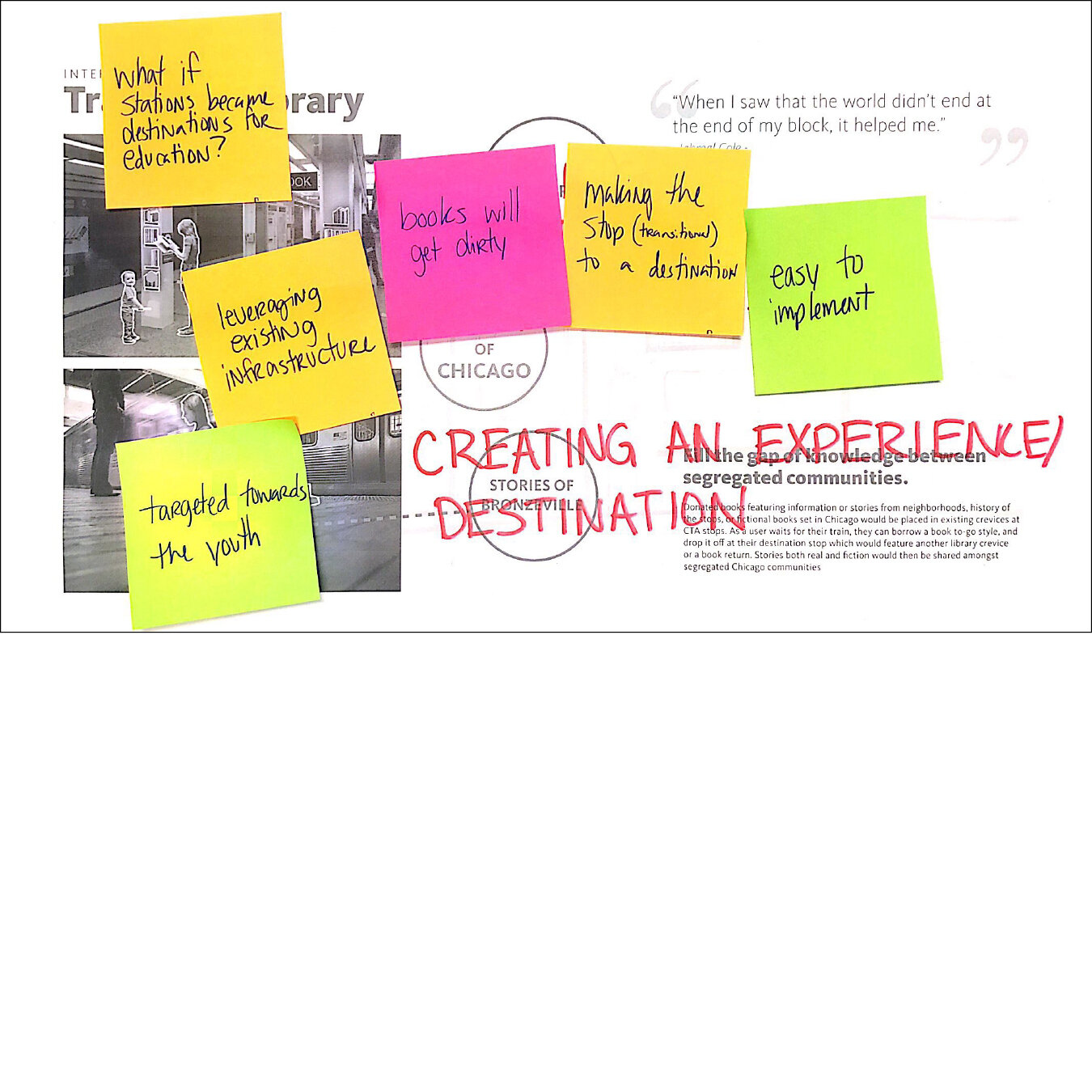
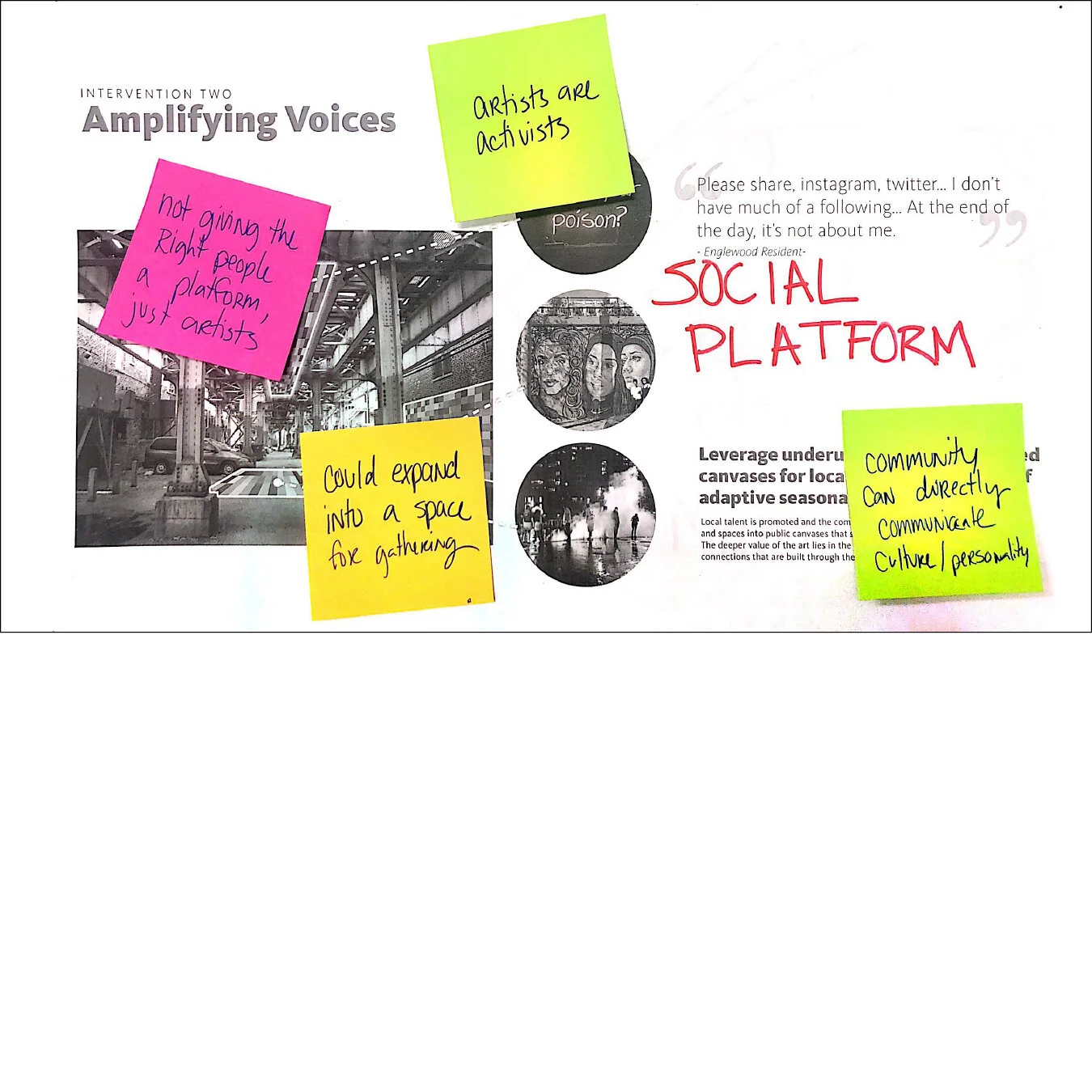
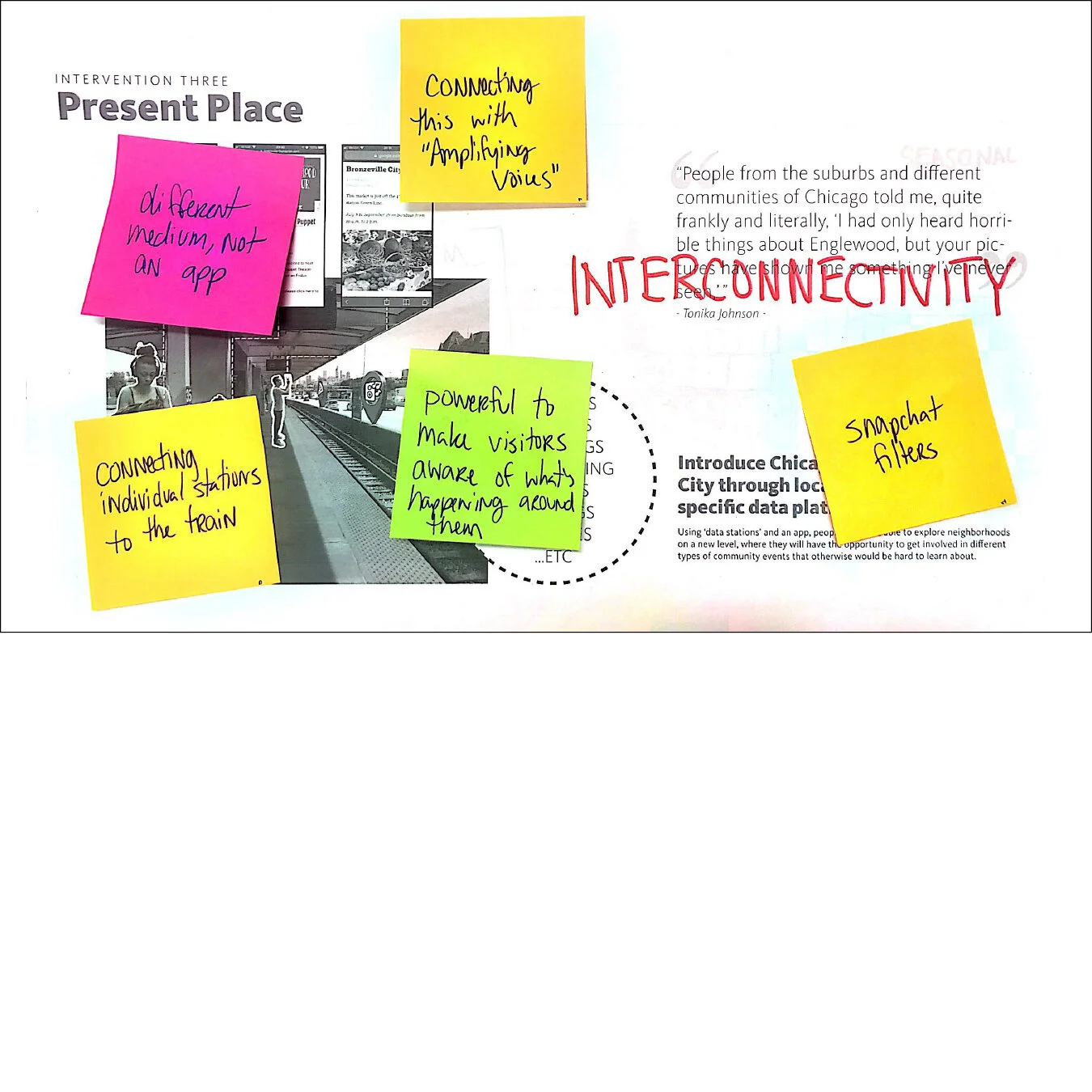
We ran the 9 interventions through a rapid testing process with members of the community and other stakeholders, highlighting the positive and negative feedback for each of the interventions. In this process, rather than focusing on the physicality of each idea, we identified the key theme of each intervention and the through-line that connected the positive feedback.
04/04
Execution
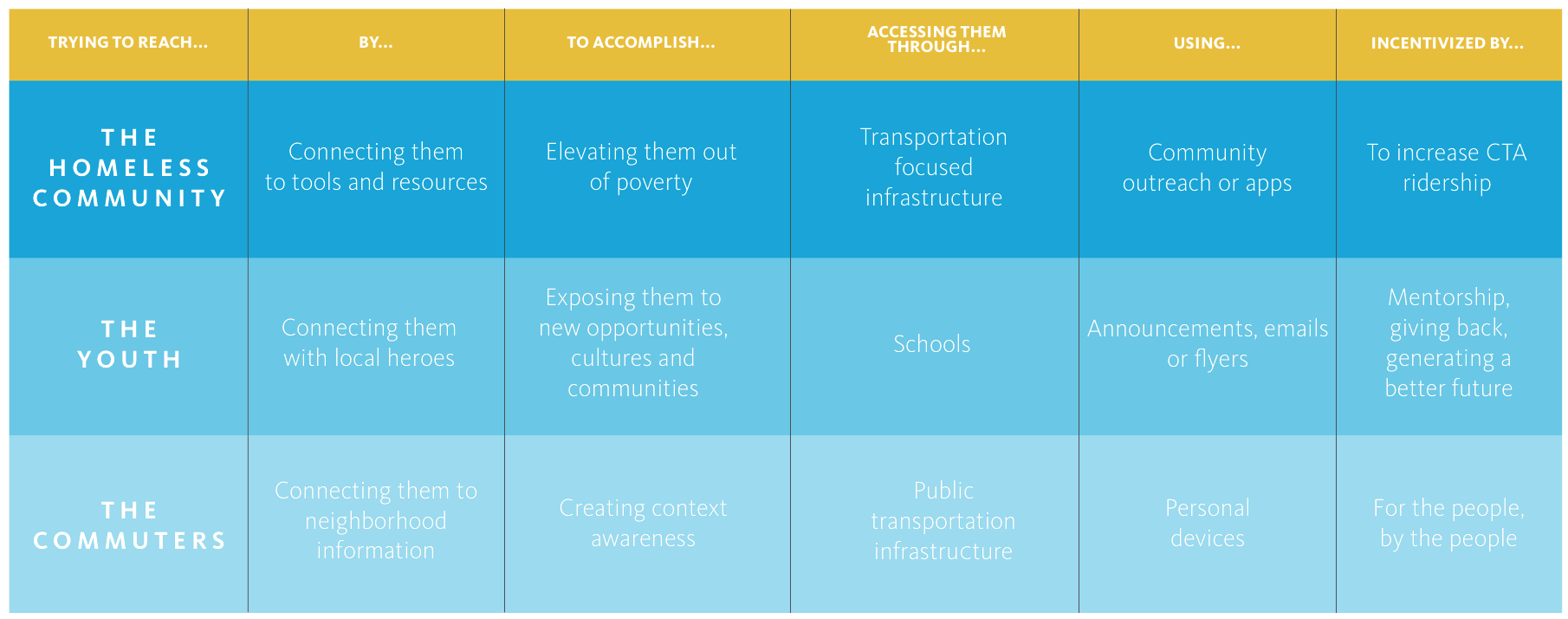
Based on our research, testing, and additional research, we began to define the final solution and brand positioning. Starting with the ‘why’ and intended outcomes of the proposal allowed us to stay grounded in the ‘matter’ rather than bogged down by ‘form’ that may not succeed.
/ Value Prop Mapping
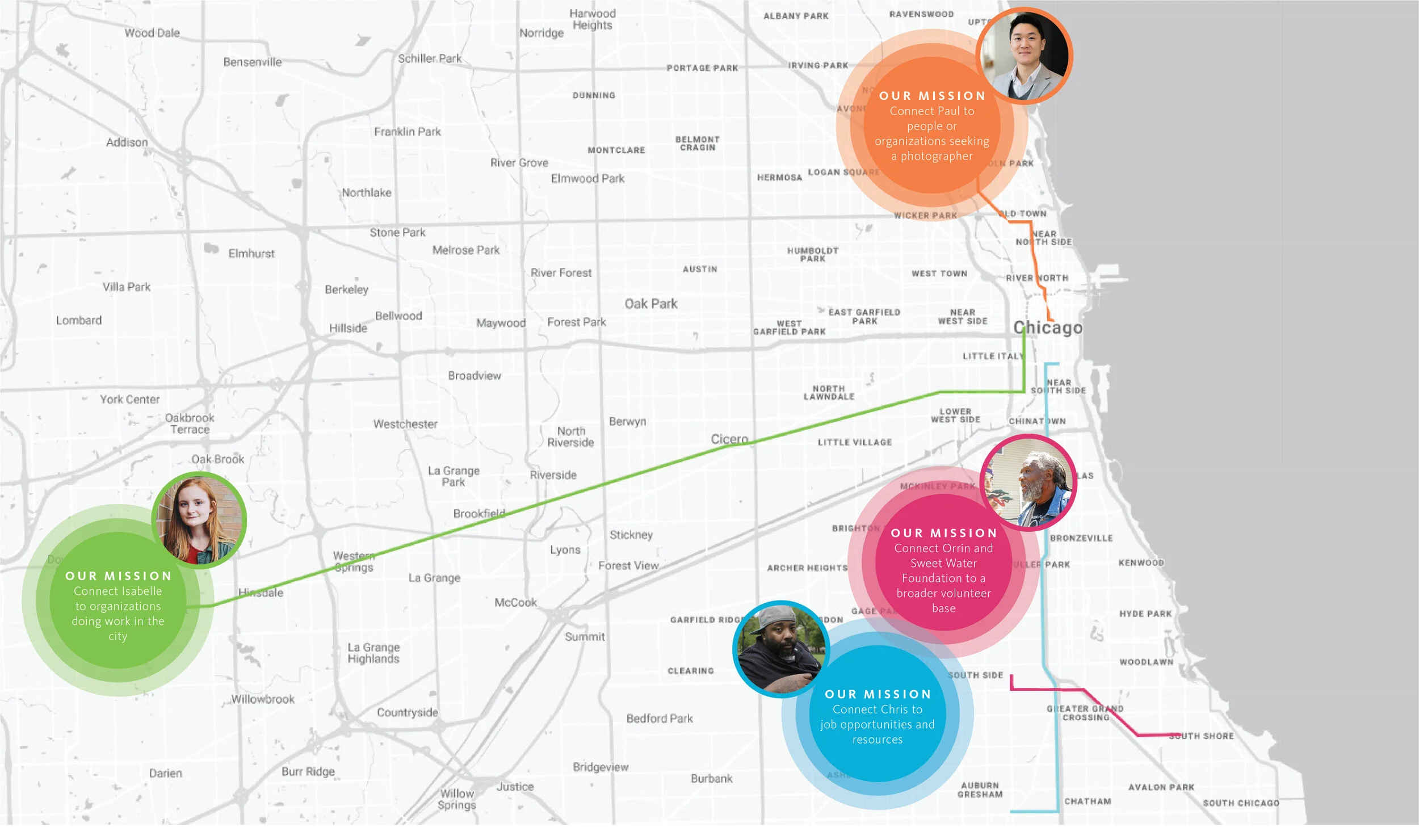
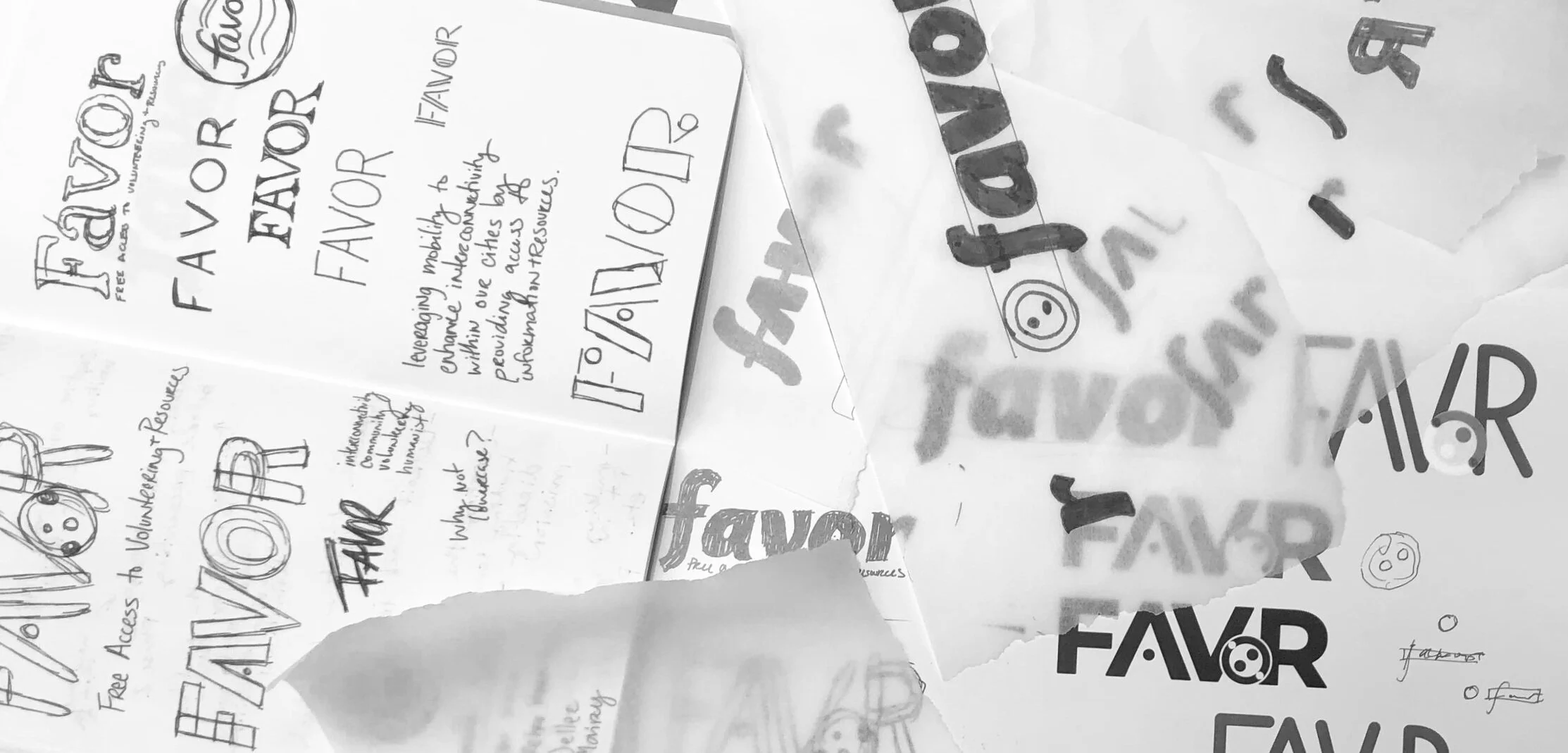
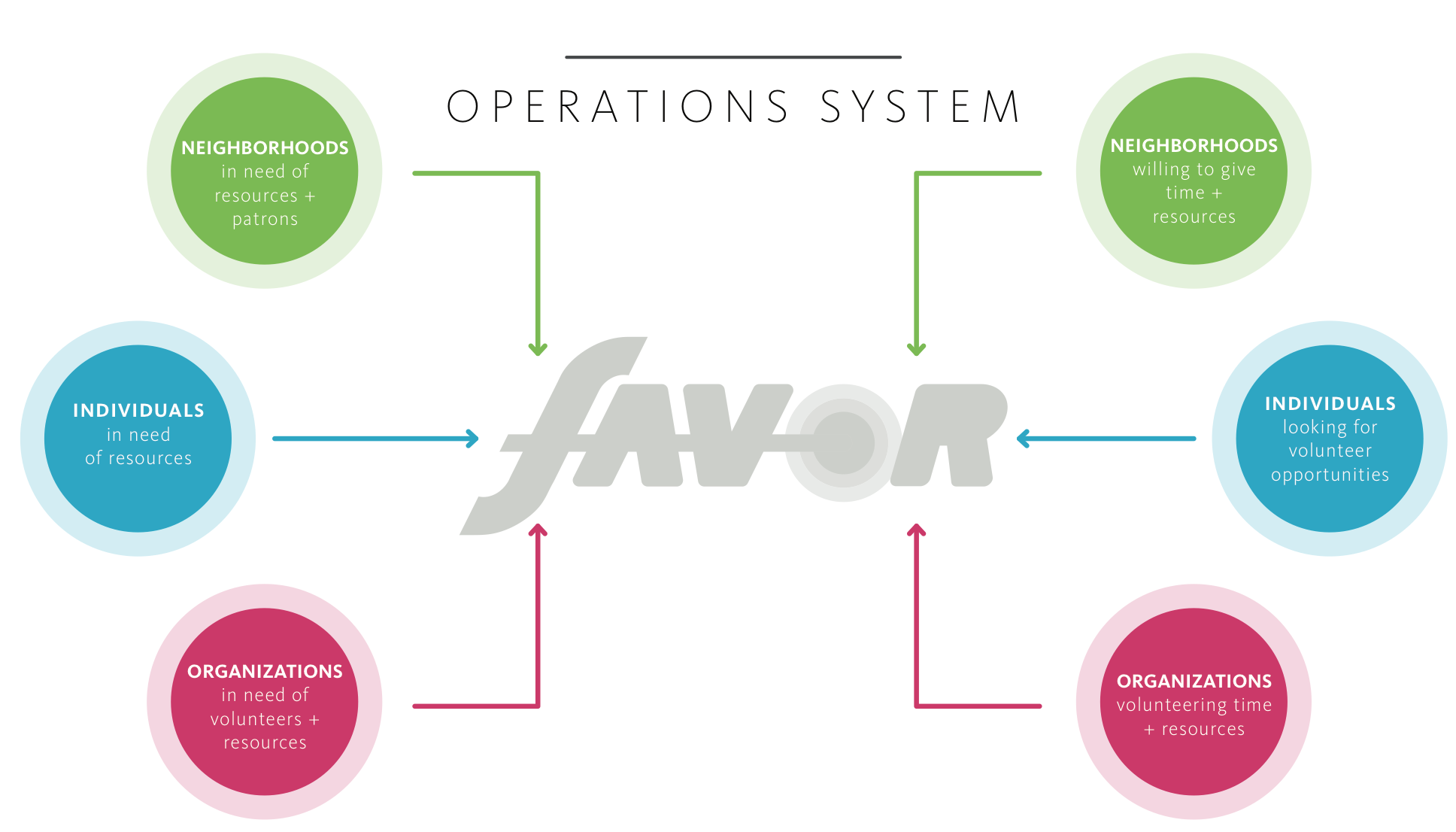
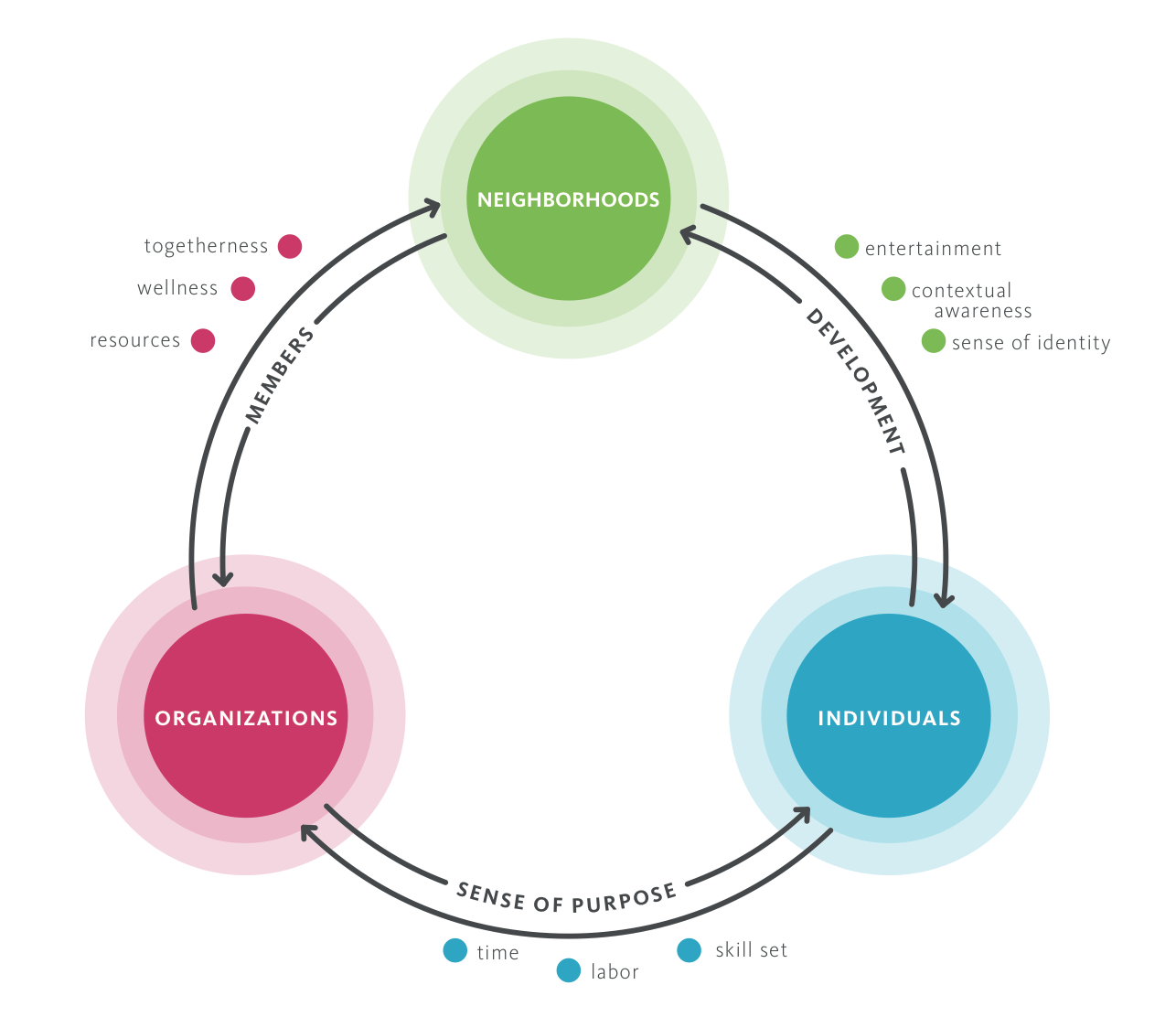
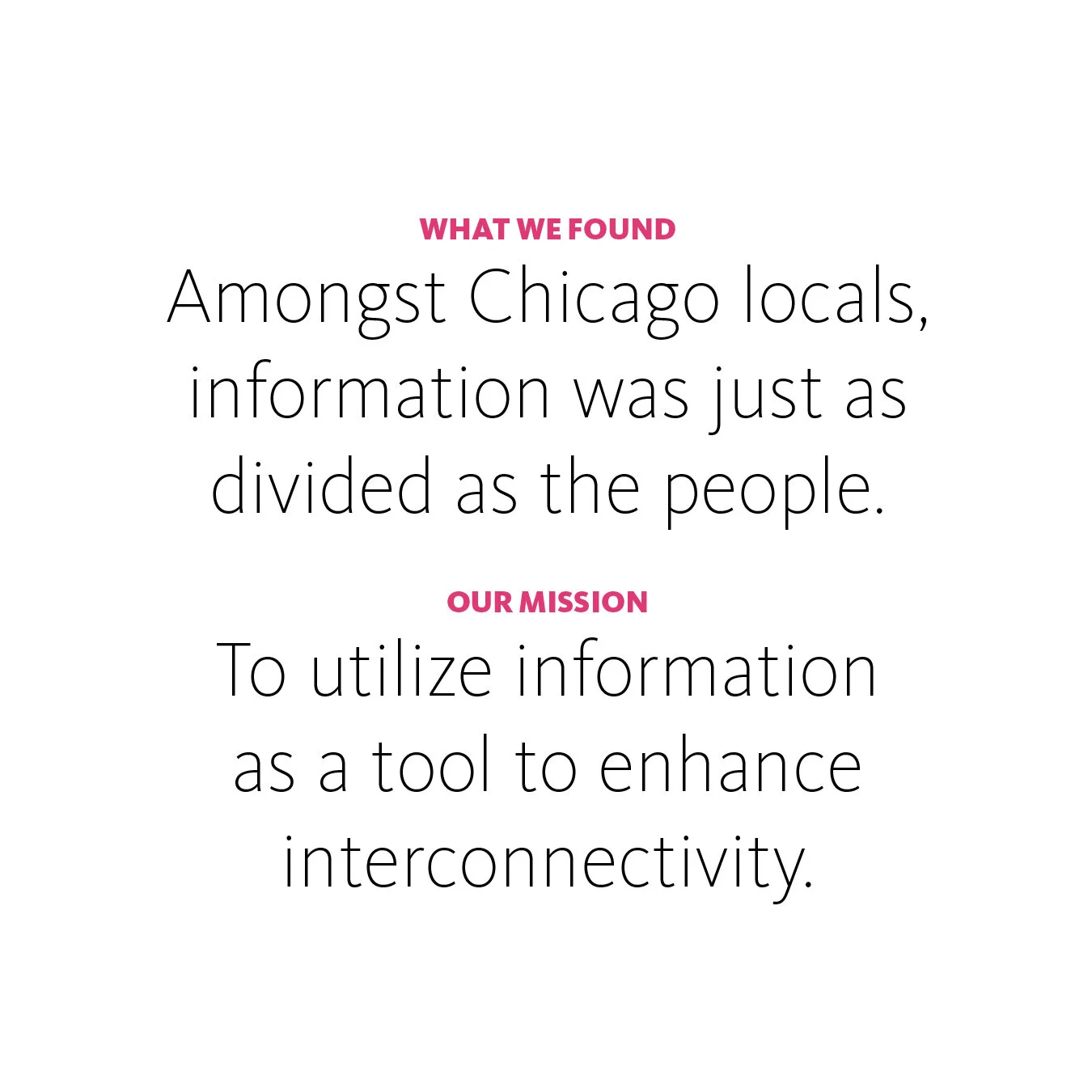
Our Core Mission: Leveraging mobility to foster interconnectivity between communities through a network of information and resources.
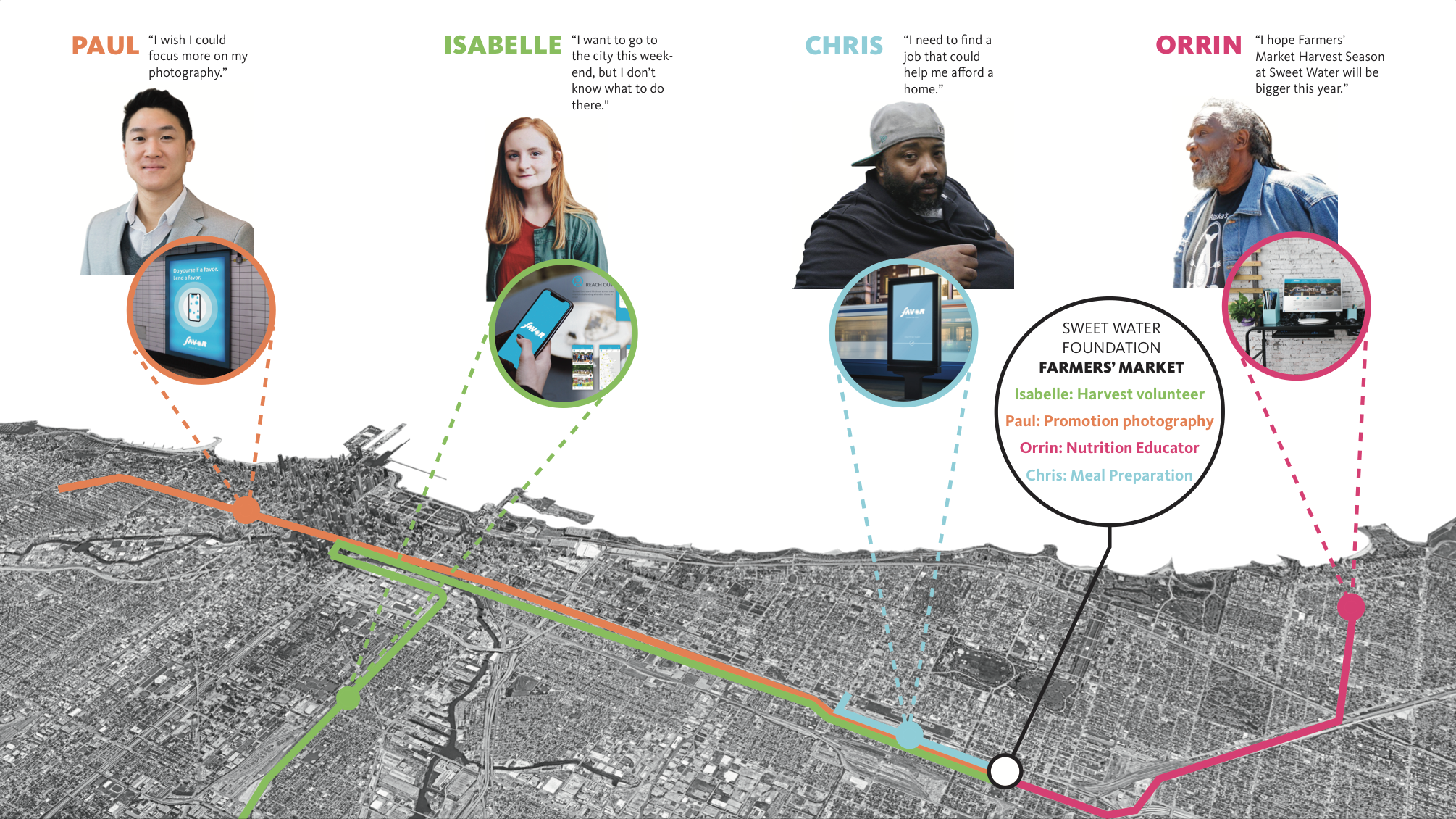
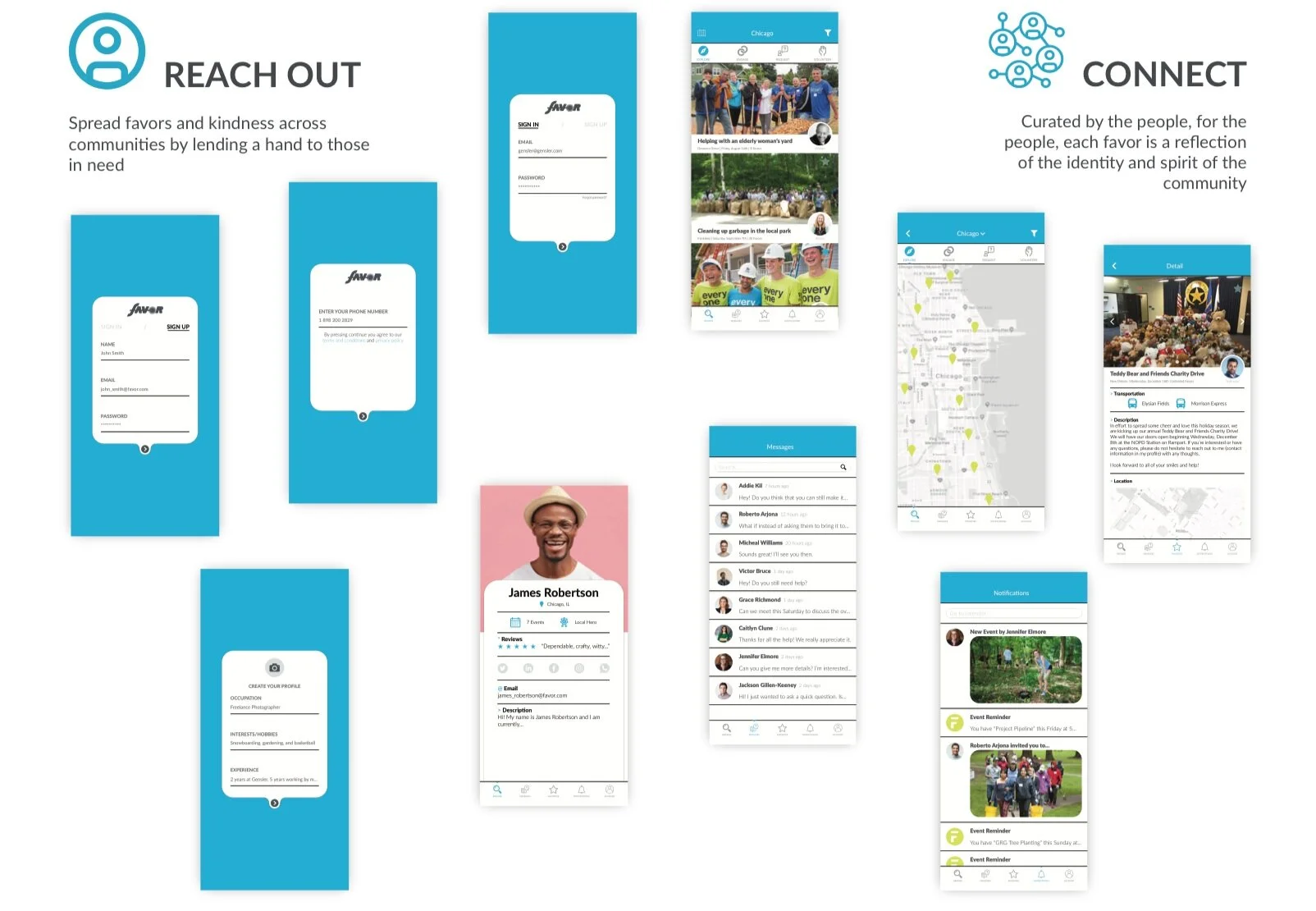
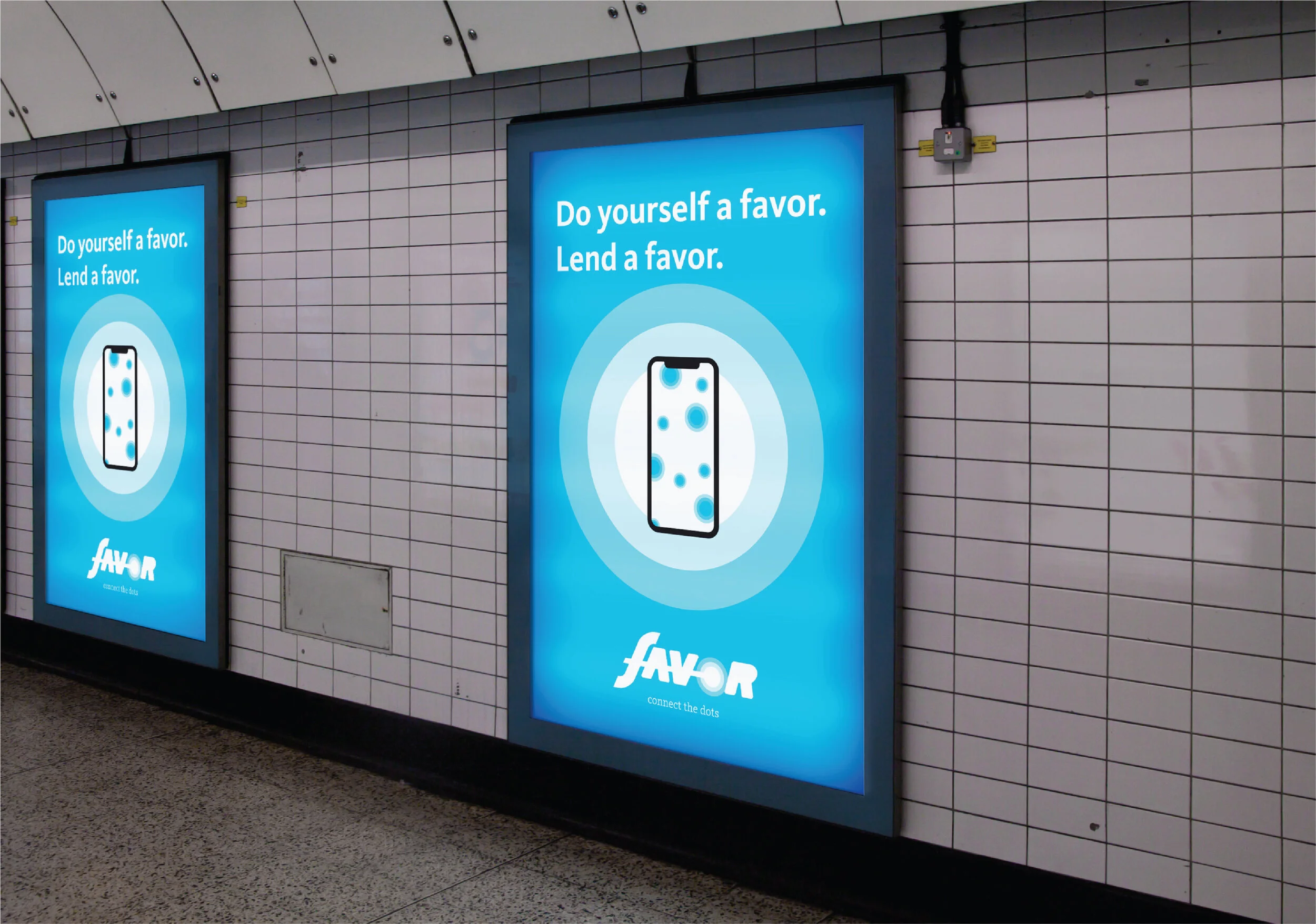
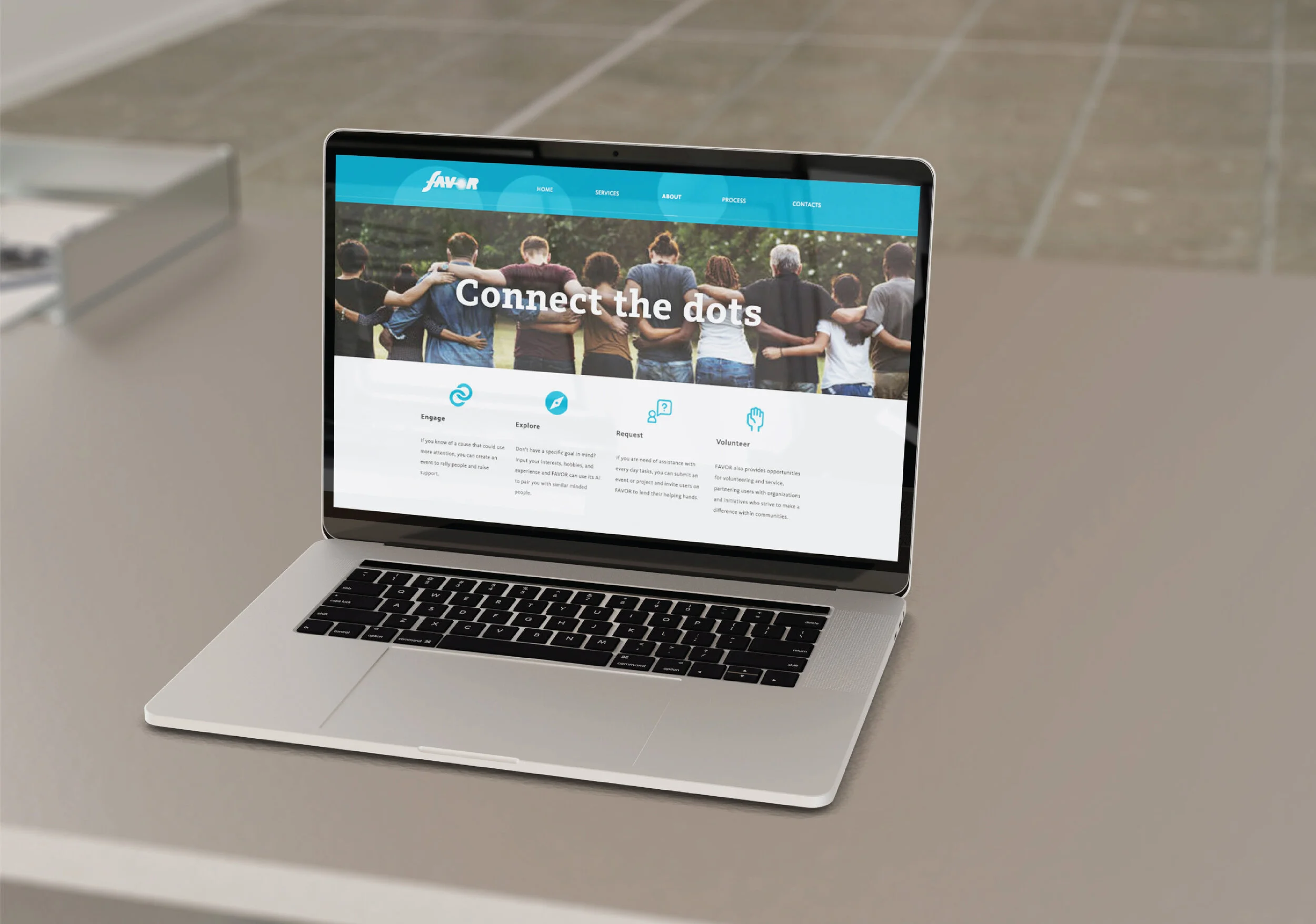
favor connects the dots, bridging communities in a way policy cannot. Striving to connect every resident in the city to one another. Transforming the divided city into a community network centered around providing one another with a helping hand.
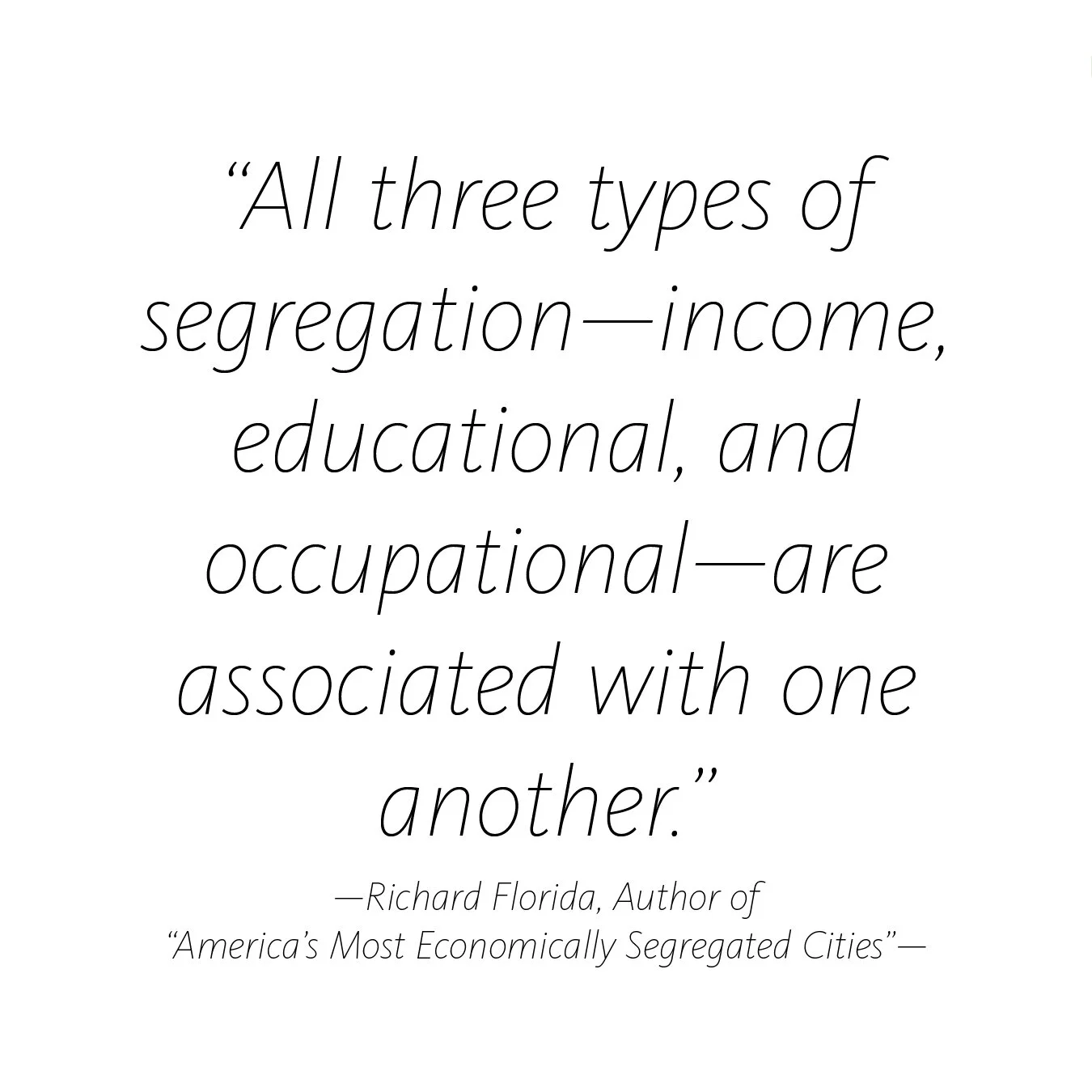
Modern cities have become hubs of culture and knowledge. However, within this urban fabric, resources remain just as divided as the people. Public funds are often unfairly allocated. People do not travel outside of their neighborhoods. Residents from opposite sides of a city may never have a conversation with one another. This segregation of resources and people inhibits progress and sustains stereotypes.
Accessibility
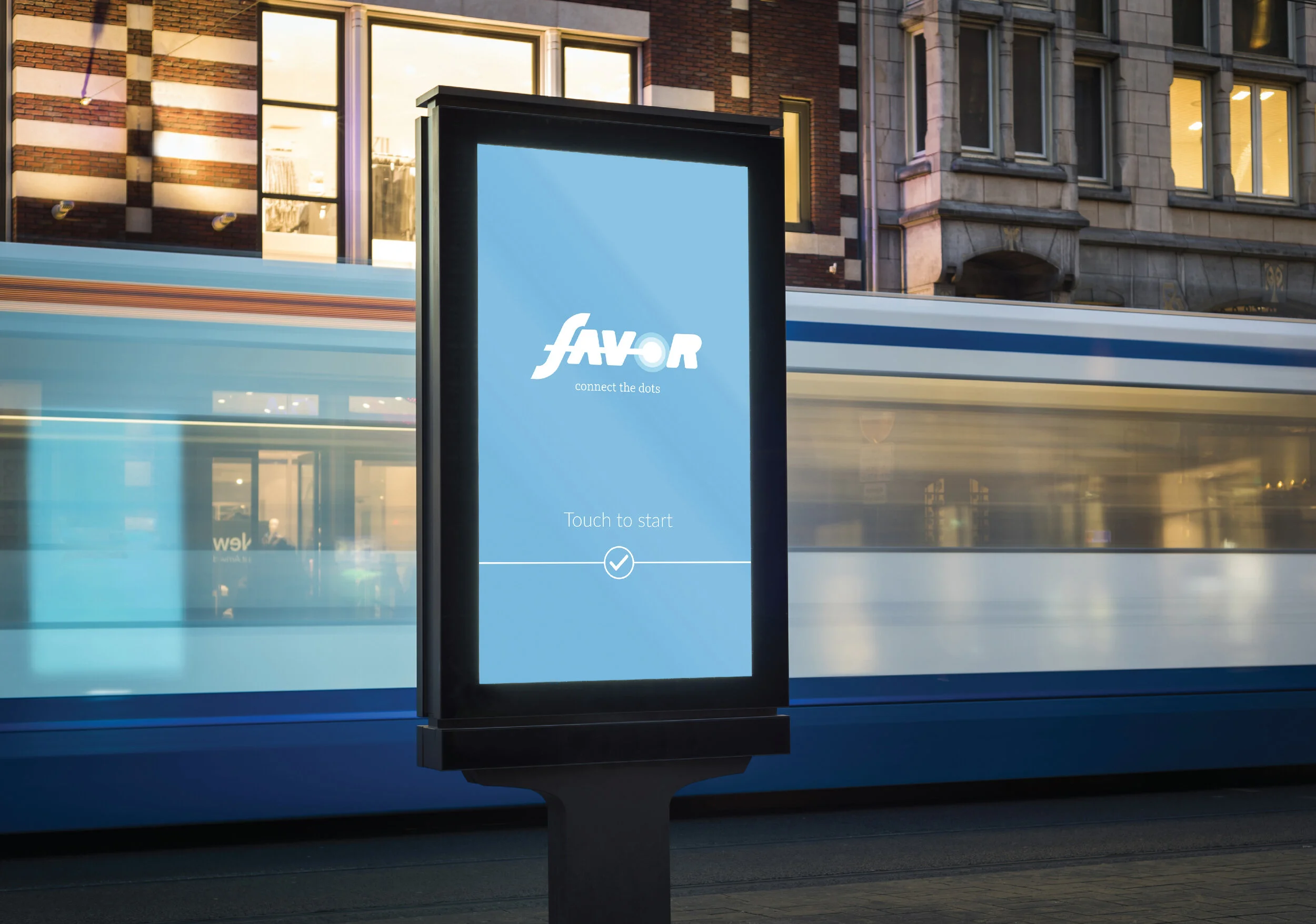
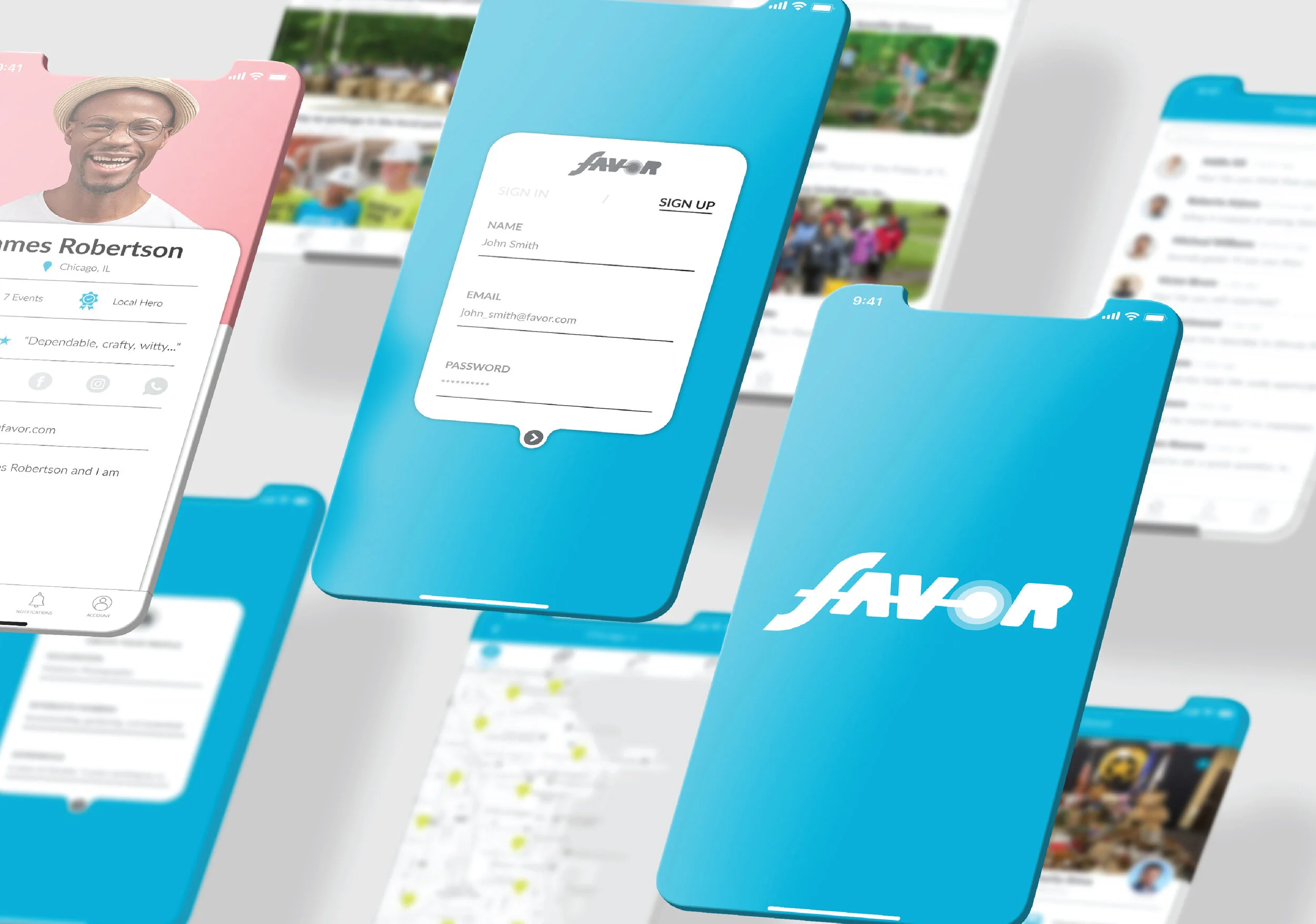
In order to accommodate the various preferred channels of communication, favor has platforms that are available to all. Partnering with public transit systems in US cities provides high accessibility to public kiosks as well, installed in high traffic areas.